
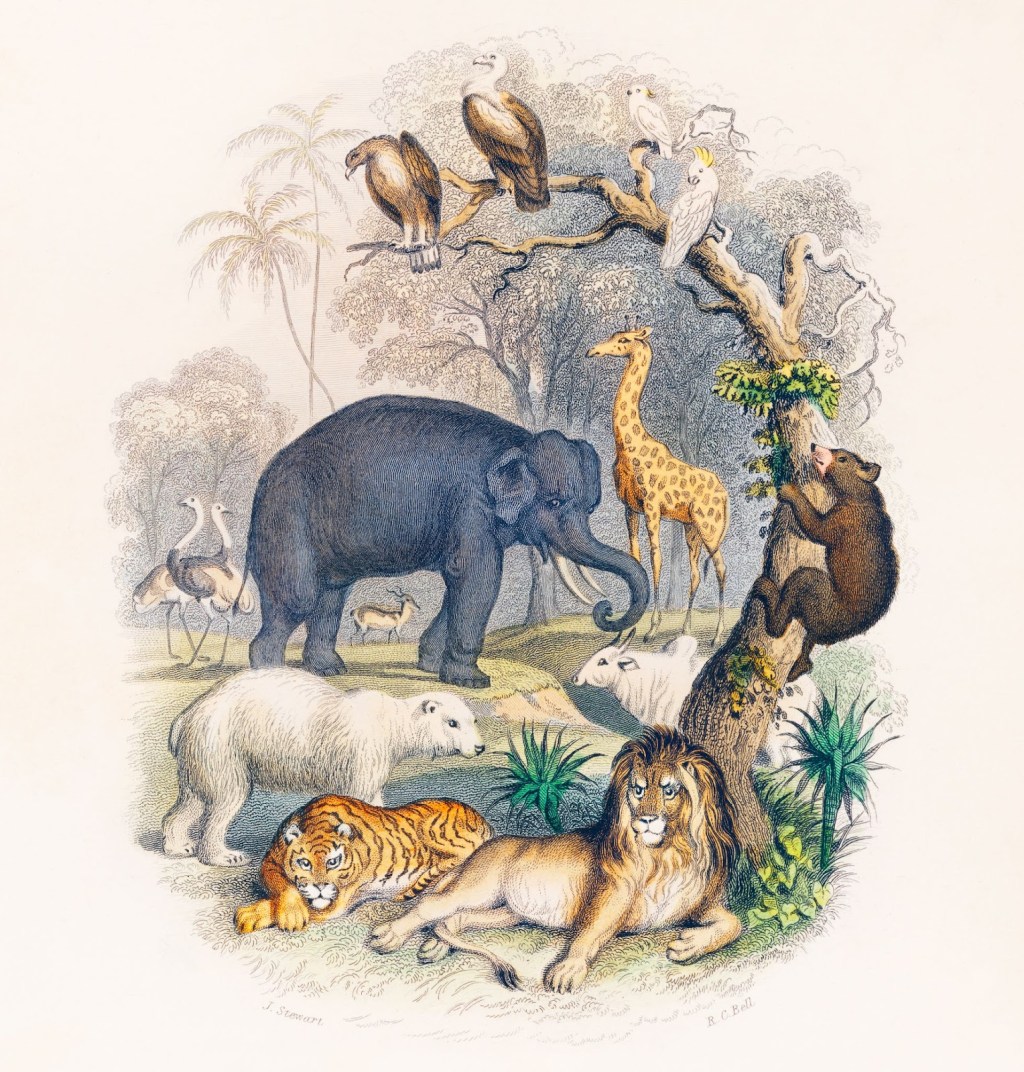
Veterinary medicine has progressed since the early ages of humanity and has reached today’s conditions. In the history of veterinary medicine, the word “veterinary” comes from the Latin word “veterinae / veterīnārius”. Also in Turkish, the word “veterinarian” means “animal” or “related to animals”. It was first used in print by Thomas Browne in 1646.
Veterinary Medicine; It is defined as the doctor who is responsible for the inspection and control functions of animal products in terms of public health; with duties such as reclamation, production, consumption of animals, as well as diagnosis and treatment of diseases.
Veterinarians, outside of their clinical works; They can also work in charitable organizations that treat animals, veterinary faculties, research laboratories, animal feed companies, pharmaceutical(medicine) companies, food companies, agricultural consultancy organizations and many other fields.
How did the profession emerge and develop in the world history?
According to many theories, the history of veterinary medicine has begun with the domestication of animals approximately 15,000-20,000 years ago. The first known veterinary practice dates back to B.C. It has emerged in the Middle East in 9,000 BC. Sheep herders used primitive medical skills to treat their animals, including the dogs that guarded their flocks. Thousands of years later, B.C. Between 4,000 and 3,000 BC, medical treatment of animals became more common in Egypt, but it was still not greatly developed at that time.
Old primitive people; They began to domesticate cats, poultry, and dogs, and pet owners also began to view them as members of their households, as most of us do today. As humanity emerged from the Stone Age, They domesticated the wild natural lives of animals, meeting the needs of working dogs and sick animals has become very important.
Approximately in B.C. 1900, some people discovered the first written records of “veterinary medicine” in four sacred Hindu texts. In these texts, there are two separate writings that outline the fields of human and animal medicine. In 1850, archaeologists discovered fragments of an ancient veterinary medicine textbook made of papyrus. This text covers diseases related to birds, cattle, dogs and fish. horses; They were the primary focus of ancient medical care because they were economically important for transportation, agriculture, and trade purposes. It is stated that in Mesopotamia, one of the first civilizations, the treatment of diseases was getting done by priest-doctors.
The first veterinarian known in written history is “Urlugaledinna”. Throughout history, veterinarians have been given different titles in many civilizations and some of those are: Salihotriya, Salutri, Hippiatroi, Dampezisk, Baytar, etc. However, the most common of these names in the West was undoubtedly used to describe veterinarians in the Roman Empire. The term used was “Medicus Veterinarius”. This Latin expression was used at that time to mean “Animal Doctor”. In Sumerians, one of the civilizations that ruled in Mesopotamia, human doctors were called “A-su” and animal doctors were called “Monai-su”.
In the ancient Greek civilization, “hippiatroi”, meaning “horse doctor”, was used for people interested in the treatment of horses. In Ancient Greece, which was especially developed in the Aegean region, veterinary medicine, especially horse health, developed significantly. B.C. IV. The philosopher Aristotle, who lived in the 16th century, also practiced veterinary medicine. He mentioned animal health in his work “Historia Animalium“.
In the Roman Empire, ancient etymologists saw that the word “venterina” was used in the sense of “the waist and abdominal region to which the load is attached to the animal” and “animal medicine”. The word “Veterinarius” means “beast/animal of burden” in Latin. The first veterinary school was founded in Lyon, France, by Claude Bourgelat in the 1760s. With the opening of this school in France, it is accepted that scientific studies in veterinary medicine were officially born.
As human medicine has developed and advanced over the last several centuries, so has veterinary medicine. In America in 1863, the American Veterinary Medical Association emerged as a way to promote the field of veterinary medicine. Its purpose was to control the progress of veterinary medicine and its practitioners. Even later, in 1965, the Food and Drug Administration (FDA) established a Veterinary Medicine Branch to oversee veterinary drugs. Veterinary Medicine Branch was later named Veterinary Center (CVM). The work of the CVM still has great importance today as it oversees regulations regarding food, medicine and other products intended for animals.
“Medicina Hominem Curat, Veterinaria Humanitatem”
“The human doctor treats humans, the veterinarian treats humanity.”
How did the historical development of veterinary medicine take place in Turkey?
9th-15th centuries in Islamic Civilization. “baytarname” to manuscripts on horse breeding and animal diseases between the centuries; Along with those who wrote this book, those who deal with the nutrition, care and health of animals were called “baytar“. In Turkey, veterinary medicine was practiced by people trained in a master-apprentice relationship until the 19th century. Increase in production, etc. due to the insufficient observation-experiment based information conveyed by empirics (= empiricism) that do not have a fully scientific quality since the Ottoman Empire and the fact that veterinary schools have been opened in Europe and animal existence, welfare and health have begun to be guaranteed. For these reasons, the lack of veterinarians and veterinary schools was clearly felt.
The first Veterinary Medicine education in Turkey was started in Istanbul in 1842 by a Prussian military veterinarian named Godlewsky with 12 students. Under the leadership of Godlewsky, the Military Veterinary School was opened in 1842. In the first semester of the school, which was taught by Prussian Royal Brigade Veterinarian Godlewsky, the lessons were taught with the help of 12 students and a translator, and the lessons were completed 3 years later in 1845. Then, in 1889, Mülkiye Veterinary School (Civil Veterinary School) was established. Mehmet Akif (Ersoy), the poet of the National Anthem, graduated from here as the top student. Later, these two schools were combined and the name “Veterinarian Mekteb-i Alisi” was changed to “High Veterinary School”. In 1933, it was moved to Ankara under the name of High Veterinary School. In line with this move, Ankara Higher Agricultural Institute was established and the Veterinary Medicine Faculty of the Higher Agricultural Institute was opened. In 1937, the name of the Faculty of Veterinary Medicine was changed to the Faculty of Veterinary Medicine. In 1939, the education period was increased to 5 years and in 1948, it was incorporated into Ankara University Faculty of Veterinary Medicine.
Some of our veterinary doctor elders in Turkish history:
Veterinarian Mehmet Akif ERSOY,
Ord. Prof. Dr. Fazlı Faik YEGÜL,
Dr. Muzaffer BEKMAN,
Ord. Prof., Dr. Şevki AKÇAY,
Ord. Prof. Dr. Süreyya Tahsin AYGÜN,
Dr. Merver ANSEL,
Dr. Sabire AYDEMİR (Turkey’s first female veterinarian)
“It can be said; Human medicine, compared to veterinary medicine, is like the inland sea against the ocean.
Human Medicine is for humans, whereas Veterinary Medicine is for humanity.”
-İsmet İNÖNÜ
Translated by Mehmet Ali KIRBIYIK.
This blog post has been verified by Doctor of Veterinary Medicine Mahmut Oguzhan YALCIN.
SOURCES
Billings, Frank Seaver. The Relation of Animal Diseases to the Public Health: And Their Prevention. 1884: D. Appleton, Erişim tarihi 20.08.2023
Erk N (1960): Türkiye’de Veteriner Hekimlik Öğretiminin Başlangıcı ve Bugüne Kadar Geçirdiği Safhalar Üzerinde Yeni Araştırmalar. A.Ü.Vet. Fak. Derg. Cilt VI No.1-2., 80-85, Erişim Tarihi: 20.08.2023
Fischer, Klaus-Dietrich. Ancient Veterinary Medicine: A survey of Greek and Latin sources and Medizinhistorisches Journal Bd. 23, H. 3/4 (1988), pp. 191-209, Erişim tarihi: 20.08.2023
Smithcors FJ (1958): Evolution of the Veterinary Art. Tindall and Cox, London, Erişim Tarihi: 20.08.2023
“Veterinarians : Occupational Outlook Handbook : U.S. Bureau of Labor Statistics”.Erişim tarihi: 20.08.2023
Internet sources :
https://vetkontrol.tarimorman.gov.tr/pendik/Sayfalar/Detay.aspx?SayfaId=32, Erişim Tarihi: 20.08.2023
http://www.veterinary.ankara.edu.tr/tarihce/, Erişim Tarihi: 20.08.2023
https://web.archive.org/web/20160219172443/https://www.avma.org/KB/Policies/Pages/veterinarians-oath.aspx, Erişim Tarihi: 20.08.2023
http://vetjournal.ankara.edu.tr/tr/pub/issue/57815/820833, Erişim Tarihi: 20.08.2023



 VETEXPLAIN