


What is Zoonosis? One Medicine, One World, One Health Approach
What is Zoonosis?
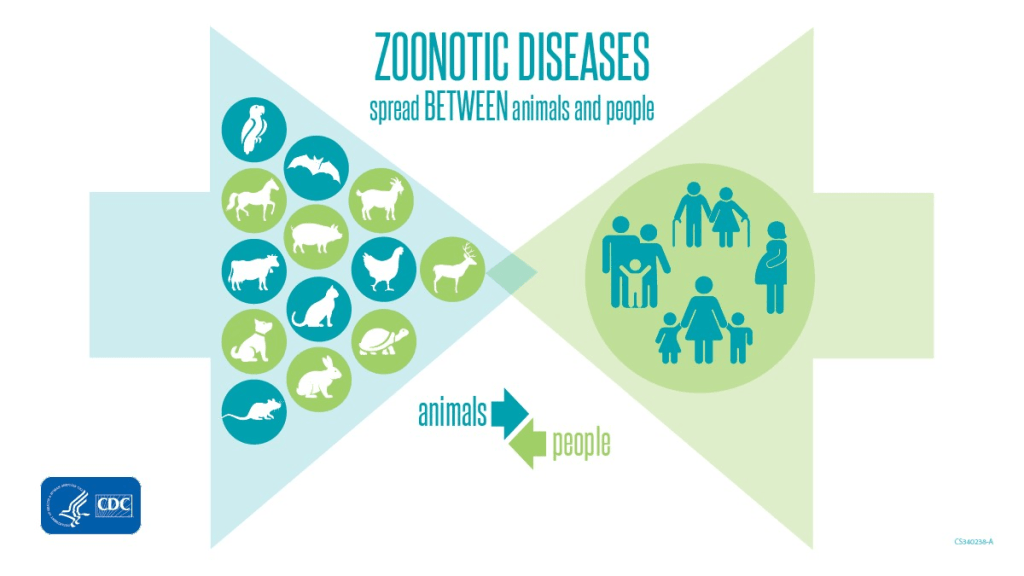
It is a concept formed by combining the Greek words “zoon” which means “animal” and “nosos” which means “disease“. It means a disease that can be transmitted from animals to humans or from humans to animals under natural conditions.
What are Zoonotic diseases?
The first study on the concept of zoonosis was conducted by German pathologist Dr. Rudolf Virchow in 1849. Zoonotic diseases have been with humanity for centuries, and 60% of the diseases that affect public health are zoonotic. More than 200 zoonotic diseases have been identified to this day.
Rabies, Tuberculosis, Anthrax (Anthrax), Brucellosis, Bovine Spongiform Encephalopathy (Mad cow disease), Leptospirosis, Salmonellosis, Leishmaniasis, Echinococcosis, Toxoplasmosis, Bird flu, Swine flu and COVID-19, which has recently affected the whole world, are common zoonosis that we all know. It is one of the diseases.
How are Zoonotic diseases transmitted and how can we be protected?
Many diseases are transmitted from animals to humans through organisms called vectors. These vectors (intermediary creatures); These may be flies, ticks, rodents or their secondary animals (e.g. ticks). Transmission of zoonotic diseases to humans; It occurs as a result of direct or indirect contact with infected animals or animal products, animal foods, secretions, blood or other wastes of infected animals, and contaminated materials such as skin and fur.
If a country does not fight well with animals in terms of zoonotic diseases and cannot safely market its animal products, the people of that country are at risk from many zoonotic factors.
One Medicine; It is an excellent unifying concept for bringing together human health practitioners, veterinarians and environmental health professionals. One Health is recommended and supported by leading scientists from many countries and organizations including the World Health Organization, Food and Agriculture Organization, World Organization for Animal Health, International Federation for Animal Health, Global Alliance for Rabies Control, Infection Ecology and Epidemiology Network Uppsala. .
Success in the fight against zoonotic diseases is possible with the One Health approach. The One Health Approach refers to the collaboration and collaboration of different disciplines in order to achieve full health for people, animals and the environment locally, nationally and universally. And in this way, it aims to protect world health. Covid-19 has also demonstrated that this approach is indispensable. However, the approaches that can be suggested in the fight against Zoonoses are;
- Raising public awareness about zoonotic diseases and their prevention,
- Conducting risk analyzes regarding zoonotic diseases and thus identifying threats in advance,
- Strengthening the laboratory infrastructure for the diagnosis of zoonotic diseases, rationalizing approaches to treatment,
- It can be expressed as monitoring, evaluation, coordination and planning on the subject.
What is “One Health” ? What does this approach aim for?
The aim of the One Health approach is “prevention is superior to treatment” in order to provide better service to the public. To defend the holistic protection of health based on the principle of One of its aims is to produce future-oriented policies and ideas by working in an integrated manner across more than one sector.
What is the role of Veterinarians?
In the world we live in, humans, animals and ecosystems are tightly interconnected. The relationship between these three concepts is quite complicated. Any changes that occur in the ecosystem are directly reflected in human and animal health. In this context, a bad ecosystem means unhealthy animals, and unhealthy animals mean unhealthy people. Single medicine was introduced to prevent negativities by working collaboratively between these three different disciplines. Veterinarians play a key role in this integrated approach. The role of veterinarians is very important, both in the preventive medicine of animals and in their duties at food control points.
Translated by Mehmet Ali KIRBIYIK.
This blog post has been verified by Doctor of Veterinary Medicine Mehmet Murat KILIÇ.
SOURCES
Ankara Üniversitesi Veteriner Fakültesi.’’ Dünya zoonoz günü’’. Erişim: 11.09.2023.
http://www.veterinary.ankara.edu.tr/2021/07/06/dunya-zoonoz-gunu
Centers for Disease Control and Prevention. ‘’parasites’’. Erişim: 11.09.2023. https://www.cdc.gov/parasites/transmission/index.html#animal World health organization. ‘’one health’’. Erişim : 11.09.2023. https://www.who.int/health-topics/one-health#tab=tab_1


 VETEXPLAIN