
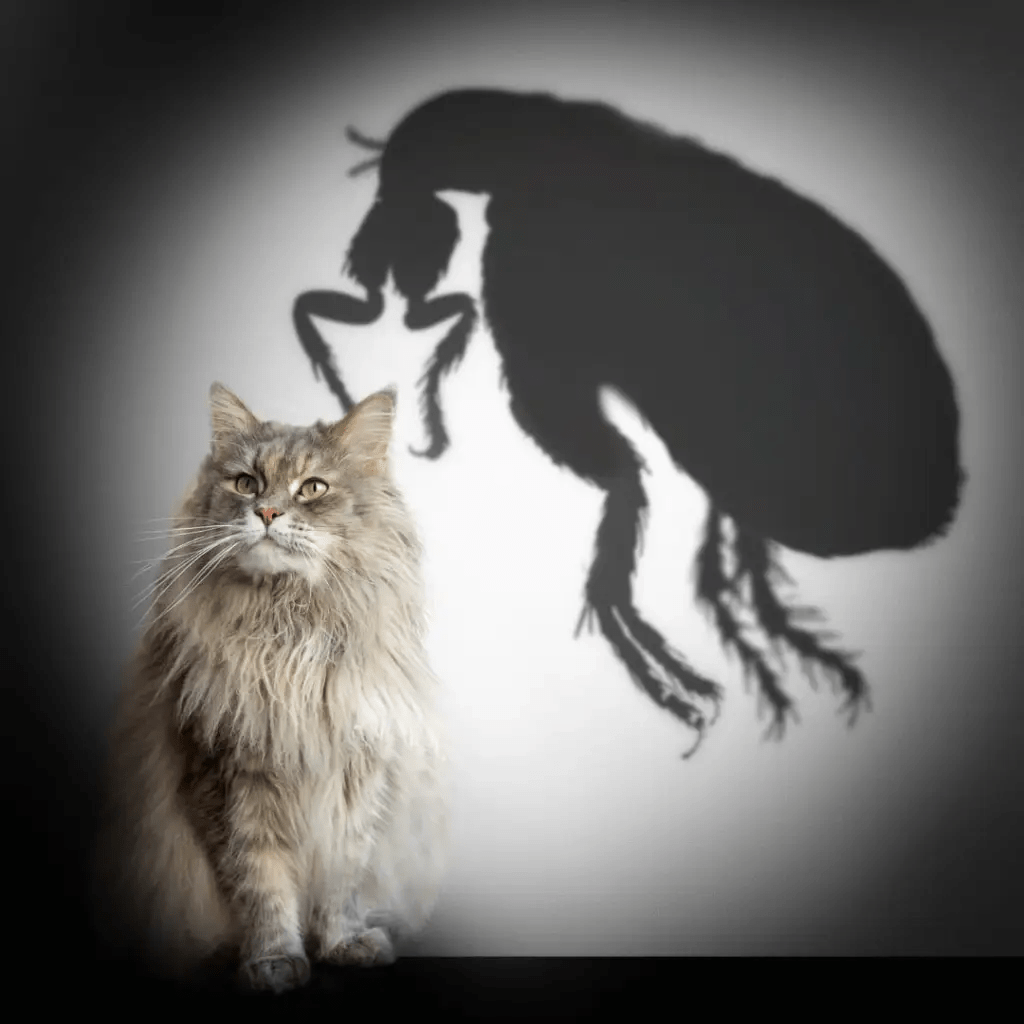
Fleas are a real nuisance because of the diseases they bring and the discomfort they cause to our animals. Before getting into the details of our fight to protect our pets from fleas, it would be best to know our enemy. Fleas, located in the Siphonaptera order of the insect class, are external parasites of mammals and birds that can reach up to 3 mm in size. They feed on the blood of their hosts, and their mouthparts are adapted to pierce the skin and suck blood. Their bodies are flattened from the sides, so they can move easily on the hair and feathers of their hosts. Their legs are quite long, making them the best jumpers among animals of the same size.
If we look at the life cycle of a flea, the duration of ectoparasitic (external parasite) treatment and the working mechanism of the active ingredients can be better understood. Fleas have 4 stages in their life cycle: egg, larva, pupa, adult. Flea eggs have a smooth, oval, white-transparent structure. It hatches 1-6 days after attaching to the host, depending on the temperature and humidity. They are generally found in areas where your animal spends the most time and constitute 34% of the total flea population.
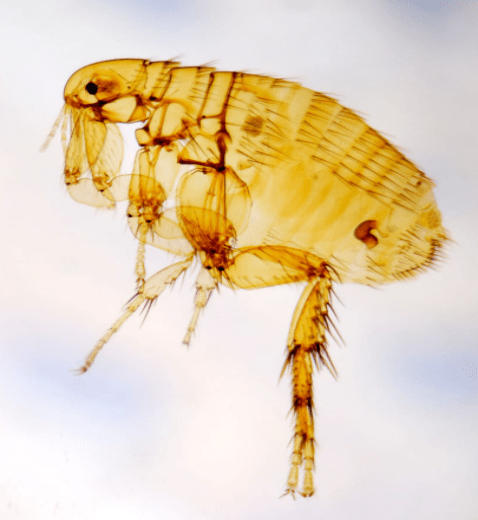
Larvae feed on organic matter, especially the residual blood content in the feces of adult fleas. It usually remains in the larval state for 6 to 36 days, but sometimes this period may be longer. After the larva forms a cocoon, it takes 7-10 days for the pupa to take its place. If it is not stimulated to leave the cocoon, it can remain dormant in the cocoon for years. The pupa form constitutes 8% of the flea population, and the adult form constitutes 1%. The lifespan of an adult flea can vary from 12 days to 113 days. They feed on fresh blood they suck from their hosts.
You may suspect the presence of fleas if you see the following symptoms on your pet:
- Itching more than normal
- Areas that look red and irritated,
- Having hair loss or completely bald areas,
- Presence of wound-like areas,
- Presence of thickened areas on the skin,
- Noticing small brown-black insects,
- The black spots you see on the fur may be flea feces. When you hold it under water to distinguish it from normal dirt, you can see a color change towards red if it is flea feces.
You should consult your veterinarian when you see the above-mentioned symptoms in order to both clear your doubts and start treatment as soon as possible. Because the things we will talk about in this blog show us that fleas should not be underestimated and that they are important for public health and the health of your pet.

Rickettsia, of which fleas are one of the vectors, is a bacterium that causes typhoid fever and many other febrile diseases in humans. These diseases show symptoms similar to a severe cold; such as high fever, headache and chills. However, skin rashes and a slowdown in the function of the kidneys and central nervous system distinguish these diseases from the common cold.
Another bacterium that it vectors is “Bartonella Henselae”. This bacterium is the causative agent of Bartonellosis, or cat scratch disease. It is transmitted to cats through fleas and to humans through cat scratching or biting. Disease symptoms include lymphadenopathy (swelling of the lymph nodes) and fever. Additionally, more severe conditions such as bacteremia and endocarditis may occur during the course of the disease.
Tapeworm eggs ingested by fleas during the larval stage turn into cysticercoids in the body of the adult flea. Cats and dogs take these tapeworms into their digestive systems through fleas while cleaning themselves. The diseases we are talking about are zoonotic diseases that also affect humans. You can click here to read our more detailed article on this subject.
FAD (Flea Allergic Dermatitis) is one of the most common infestations caused by fleas in animals. The underlying reason is that the animal’s immune system is hypersensitive to the proteins in the saliva left by the flea while biting the skin. The immune system mounts an allergic response and this is manifested by stronger symptoms than a normal flea infestation. These are accompanied by anxiety, restlessness, inflammation of the itchy skin, areas of hair loss in the fur, and crusty rashes in later periods. In such a diagnosis, it is important to follow the treatment path determined by your veterinarian.
When you consult your veterinarian, oral and/or topical antiparasitic methods suitable for your animal are selected and treatment is started. Using a parasite collar against future infections, in line with your veterinarian’s recommendation, can also be a good protection method for your animal. Even if it has no contact with the outside, there is always the possibility that our animal may get fleas, because we can also be a carrier for fleas. For this reason, you should be careful not to disrupt your animal’s routine internal and external parasite treatments.
This blog post has been verified by Doctor of Veterinary Medicine ELİF KENAR.
SOURCES
Boehringer Ingelheim. “Flea allergy dermatitis in dogs and cats”. Erişim: 14.10.2023. https://www.boehringer-ingelheim.com/companion-animals/pets/cat-dog-flea-allergy-dermatitis
Cotté, Violaine ve diğerleri. (2008). “Transmissipn of Bartonella henselae by Ixodes ricinus”. Emerging infectious diseases. 14.7: 1074.
Fehmi Tabak (2003). Enfeksiyon Hastalıkları. Nobel Tıp Kitabevleri. s. 106. Erişim: 14.10.2023.
MSD Manual. “Fleas in Dogs and Cats”. Erişim: 14.10.2023.
https://www.msdvetmanual.com/integumentary-system/fleas-and-flea-allergy-dermatitis
NBC Select. “How to get rid of fleas, according to veterinarians”. Erişim: 14.10.2023.
https://www.nbcnews.com/select/shopping/how-get-rid-fleas-ncna1262654
RSPCA. “How to get rid of fleas?”. Erişim: 14.10.2023.
https://www.rspca.org.uk/adviceandwelfare/pets/general/fleas



 VETEXPLAIN