
Since the creation of humans, we have tried to derive meaning from our surroundings, the sky, nature, and animals – essentially, our position within the universe. We have done this driven by self-preservation instincts or sometimes out of curiosity.
Every society has interpreted the quest to understand creation through its own culture and values, symbolizing it into many legends we now call mythology. In this article, we will explore the significant animal motifs that hold a crucial place in mythologies.
Humanity has worshiped beings it sanctified through paintings, sculptures, and totems, believing they possess a divine spirit (anima). These revered entities have sometimes been animals and, at other times, concepts like the sun and moon that we couldn’t reach or comprehend.
Looking back at the deification of animals, it’s evident that human fear played a crucial role. However, humans directed this fear towards a purpose, attempting to understand the power and nature of animals. As they understood, they also developed admiration for these creatures.
The strength of animals led humans to admire them. In short, humans believed that animals were superior beings. It was during this period that we, humans, accepted the superiority of animals and deified them, known as the “zoomorphic era” or the “era of animal-shaped gods.”
The zoomorphic era gradually weakened, and belief shifted to hybrid gods, part human and part animal. This weakening continued until the gods took on a human appearance, marking the anthropomorphic era. (Now, gods looked human.)
Now, let’s embark on a journey through some well-known animal myths that have found a place in many myths.
Wolves in Mythologies
The wolf figure is highly prominent in Turkish mythology, playing a crucial role as a maternal ancestor, especially in the Ergenekon and Gray Wolf epics.
In Greek mythology, there is the motif of Lycaon, a werewolf. Various sources depict Lycaon, the king of Arcadia, as arrogant and impious. Angered by his actions, Zeus visits him in disguise. Suspecting his guest might be a god, Lycaon presents him with the flesh of a child to eat. Enraged, Zeus transforms Lycaon and his family into wolves as punishment. This myth is considered the origin of werewolves.
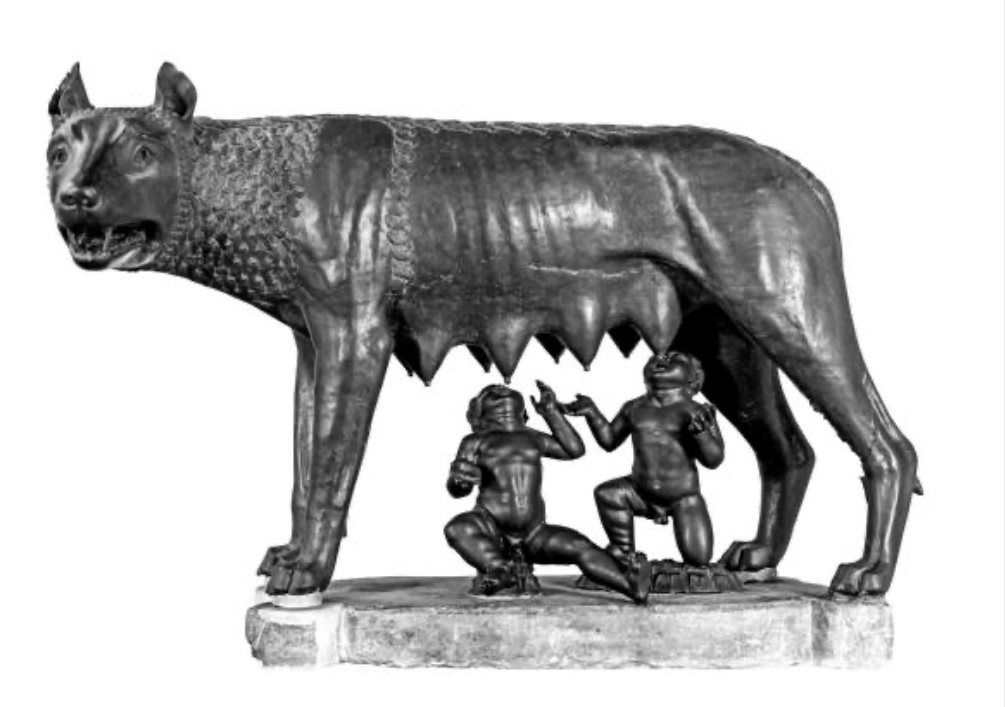
In Norse mythology, Fenrir, a giant wolf and the child of the mischievous god Loki, is destined to kill Odin during Ragnarok, the apocalypse. Additionally, Fenrir’s offspring is foretold to consume the sun and moon.
Horses in Mythologies
The horse totem appears in the “12 Animal Turkish Calendar,” representing the 7th year. Legend has it that the prophet Khidr, seeking a remedy for death, encounters winged and swimming horses living in the Lake of Milk beyond the Mount Qaf. Unable to capture these horses, Khidr is said to later catch them by mixing wine into the Milk Lake, capturing them intoxicated and tearing off their wings.
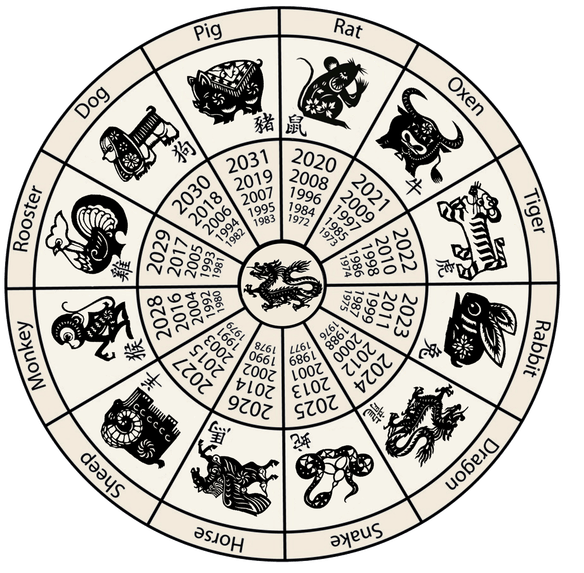
In Norse mythology, the cunning god Loki’s child is Sleipnir, an eight-legged horse known as the fastest among all horses. Sleipnir accompanies the mighty god Odin, crossing the sky, realms, and seas, traveling to places.
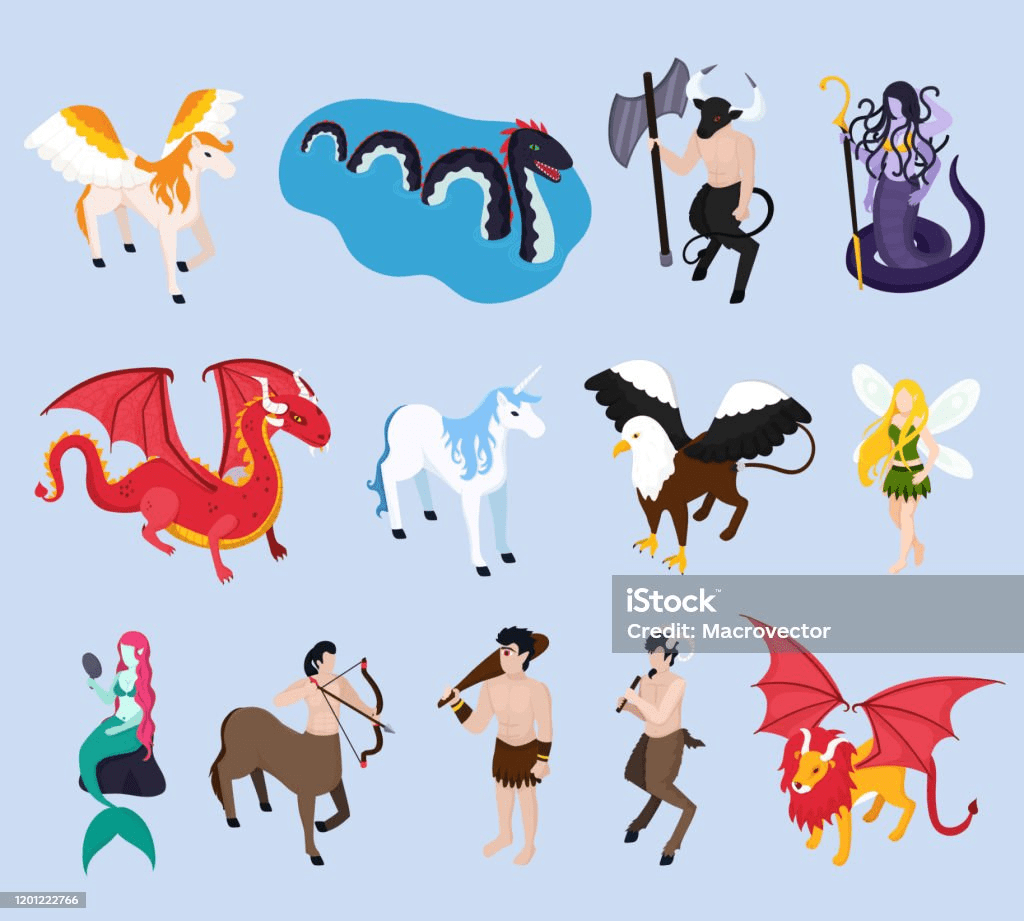
In Greek mythology, the winged horse Pegasus holds a significant place. Born from the severed head of the Gorgon Medusa, Pegasus resides on Mount Olympus, inspiring artists. Zeus, considering the winged horse’s beauty, loyalty, and services, transforms Pegasus into a constellation.
Cats in Mythologies
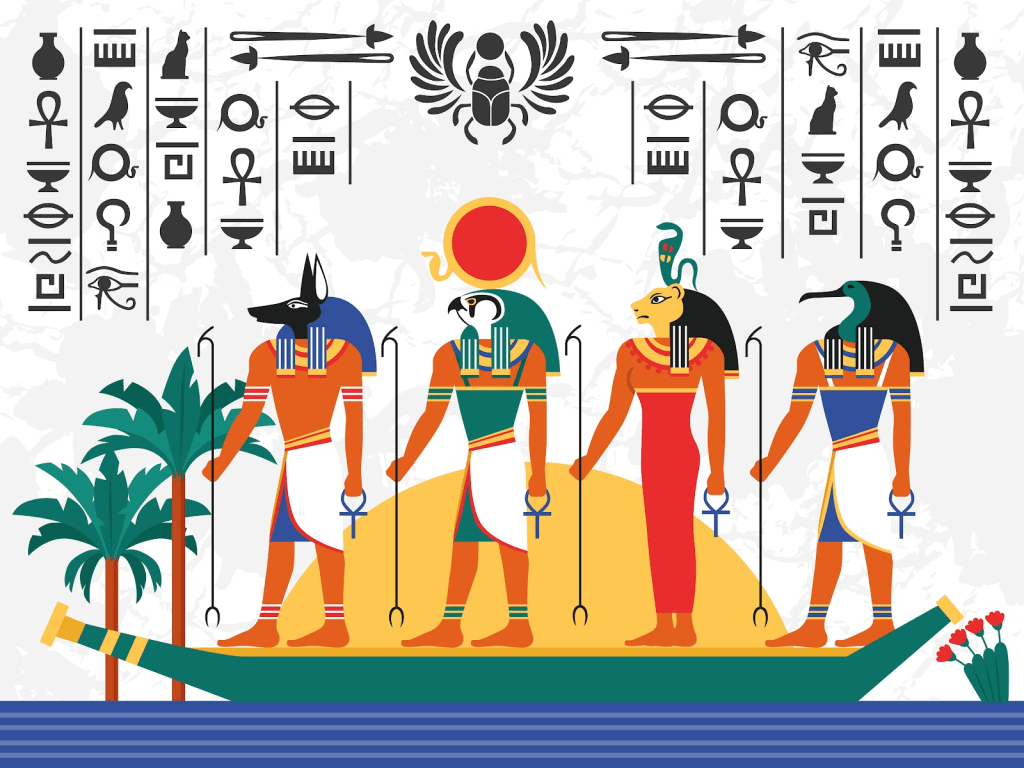
Especially in Ancient Egypt, cats were considered sacred. They were employed to eliminate rodents that harmed grain stocks. Bastet, the goddess with a cat/lioness head, was a fertility goddess who represented the power of sunlight to bring prosperity. Bastet later transitioned from a lioness appearance to that of a cat during the Middle Kingdom.
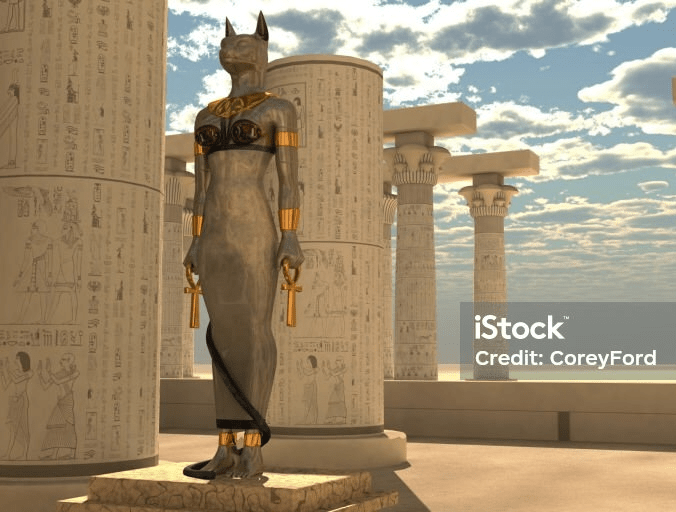
Cats were mummified and buried in special cemeteries upon their death during that era, adorned with valuable jewels such as gold earrings.
Later, in the Middle Ages, cats became associated with darkness and were feared. In the medieval witch hunts, it was believed that witches could transform into cats, leading to the persecution of these animals. Unfortunately, this hostility towards cats coincided with the proliferation of rats, contributing to the outbreak of the Black Death.
Lions in Mythologies
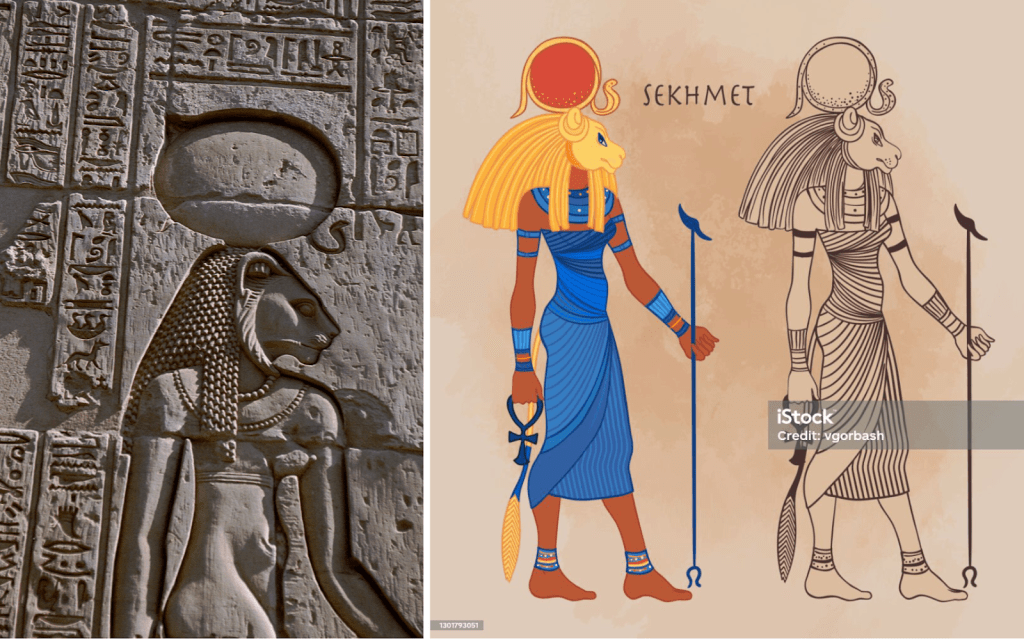
In Egyptian mythology, Sekhmet, the lioness-headed goddess, symbolizes war, fire, dance, destruction, and revenge. She is Ra’s daughter and represents the power of the sun’s rays to bring abundance. Sekhmet is portrayed as both a destructive and creative force in the Book of the Dead.
In Greek mythology, the first of Hercules’ twelve labors is to defeat the Nemean Lion, a mythical lion whose skin is impervious to weapons. Hercules strangles the lion with his bare hands and later uses its own claws to skin it.
In Turkish folklore, the lion also holds significance, representing courage and nobility. In various legends, lions are often portrayed as noble beings.
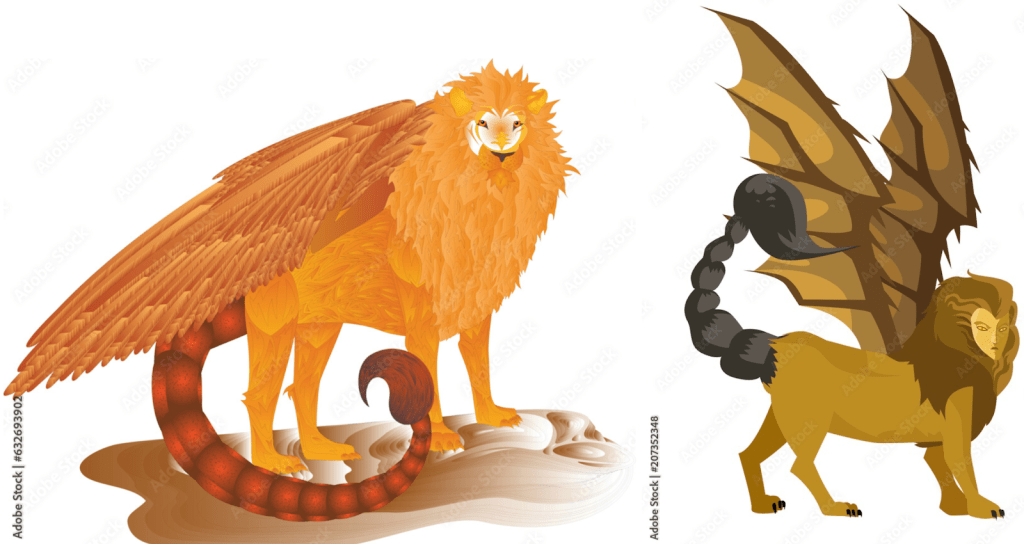
Foxes in Mythologies
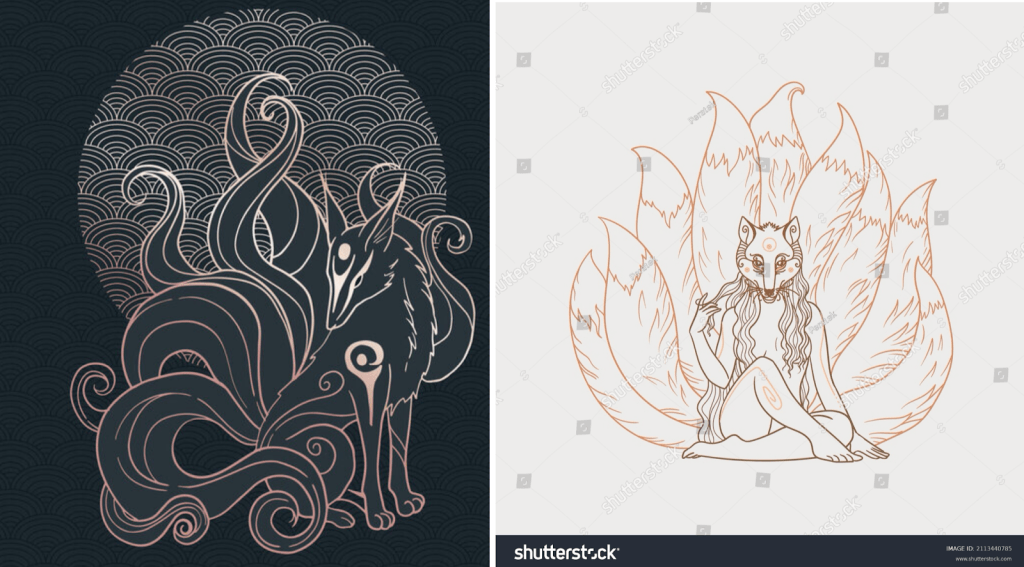
Foxes are considered sacred animals in Asian cultures. In Japanese mythology, the Kitsune, in Korean folklore as the Kumiho, and in Chinese mythology as the Huli Jing, are shape-shifting and seductive nine-tailed fox spirits. They are believed to absorb a person’s soul, devour their flesh, and acquire their memories, living for hundreds of years.
Snakes in Mythologies
Snakes are regarded as mysterious in many mythologies. Their ability to shed skin is associated with immortality and renewal. They are believed to travel between the earthly and underworld realms.
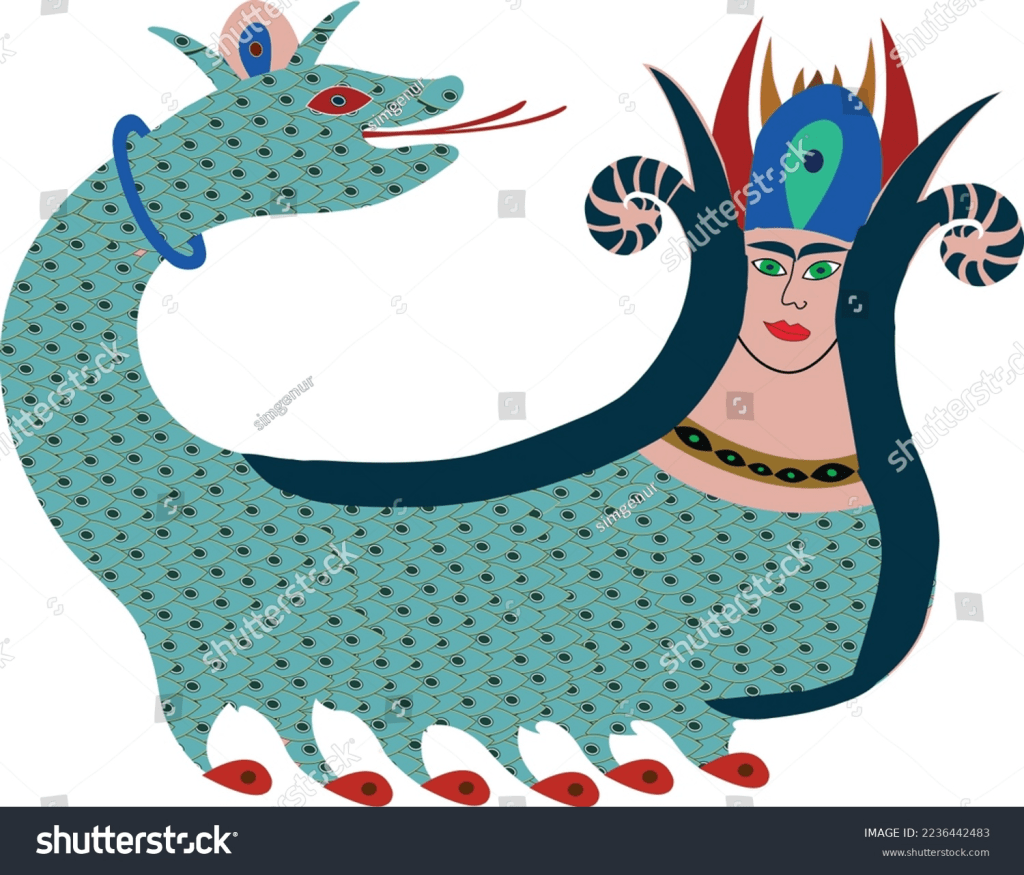
In Turkish mythology, snakes are both feared and respected, often linked with the god of the underworld, Erlik. However, the most well-known snake-related figure is Şahmaran, a mythical creature with the head of a beautiful woman and the body of a snake, often associated with wisdom and healing.
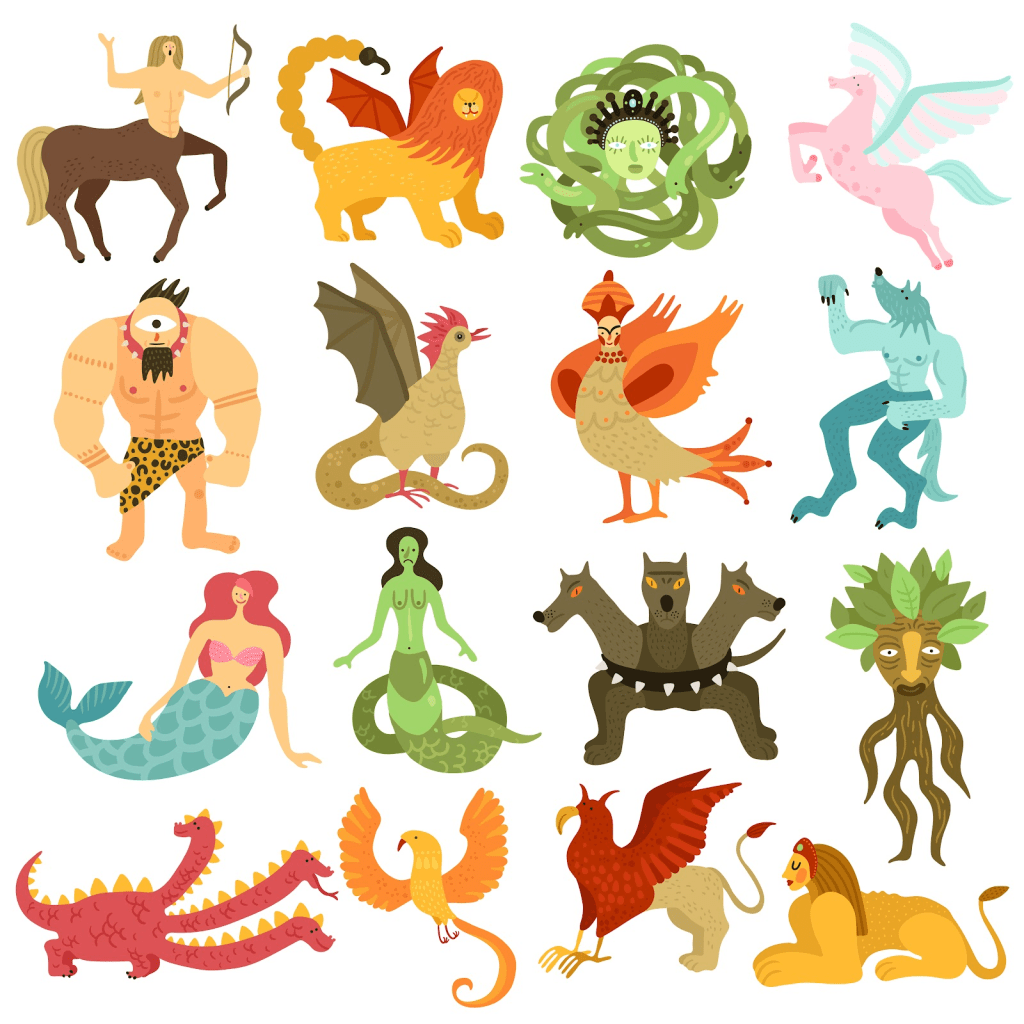
In Greek mythology, the Hydra is a many-headed serpent, and one of Hercules’ tasks is to defeat it. Each time Hercules cuts off one head, two more grow in its place.
Dogs in Mythologies
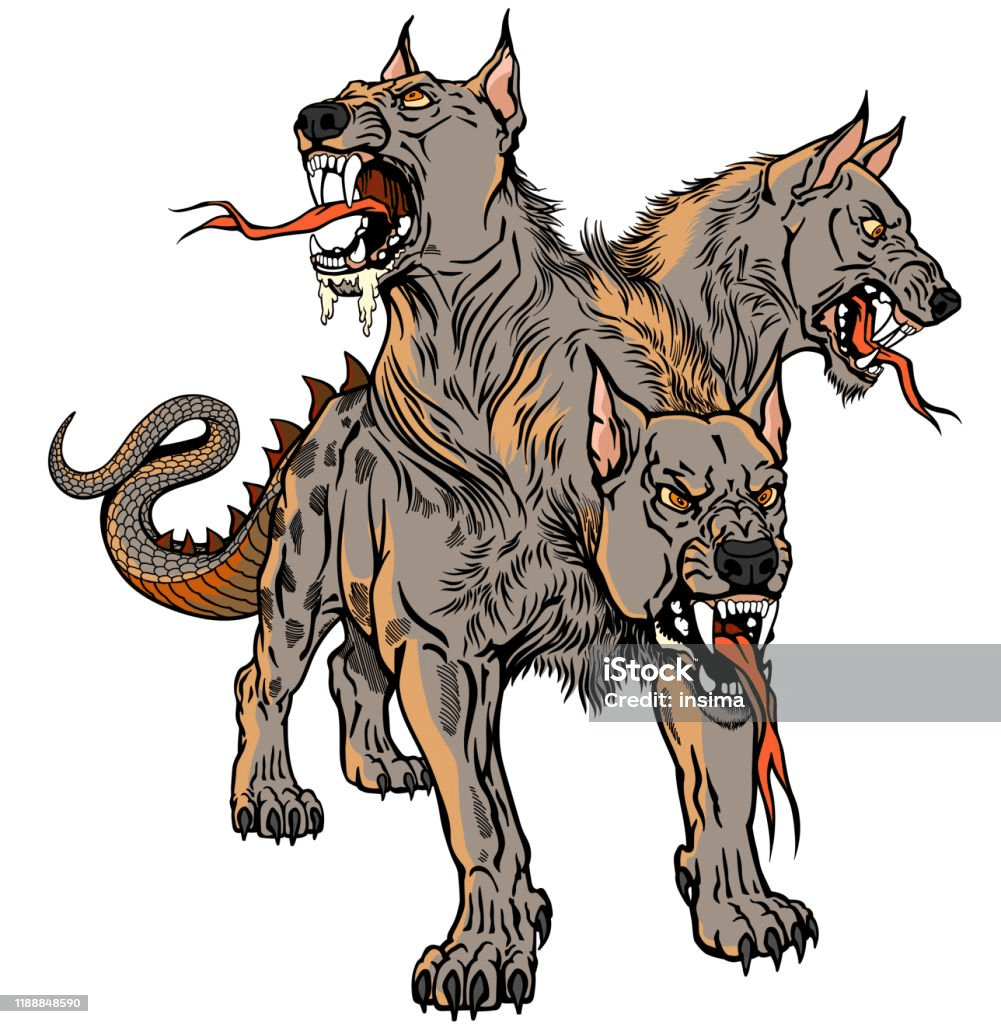
In Greek mythology, Cerberus is a three-headed giant dog guarding the gates of the underworld. Hercules’ final labor is to bring Cerberus from the underworld to the surface.
In Turkish folklore, dogs are associated with protection, and the chief god Ülgen assigns dogs to protect humans from the evil god Erlik.
Jackals in Mythologies
In Egyptian mythology, Anubis, a jackal-headed deity, is the god of death, funerals, and mummification. Anubis is associated with the practice of weighing the hearts of the deceased against the feather of Ma’at, the goddess of justice, in the afterlife.
Bulls in Mythologies
In Greek mythology, the Minotaur is a creature with the body of a man and the head of a bull. It was born from the unnatural union of Queen Pasiphae and a sacred bull. The Minotaur was eventually confined to the labyrinth of Knossos and fed with human sacrifices.
Phoenix in Mythologies
•Almost all mythologies have a large and magnificent bird. Anka, on the other hand, is a legendary and immortal bird found in many myths. In ancient Greece, its name is “Phoenix,” in Arab culture, “Anka,” in Iranian culture, “Simurg,” in China, “Tanniao,” and in Turkish mythology, it’s “Tuğrul Kuşu” (sometimes also referred to as Hüma, Sireng, Zümrüt, Devlet Kuşu). It is mentioned in the famous Arab tales “One Thousand and One Nights,” living on Mount Qaf. It is a symbol of rebirth, born from its ashes after death. It possesses extensive knowledge and skills, serving as a wise counselor to rulers and heroes. Its tears are believed to have healing properties.
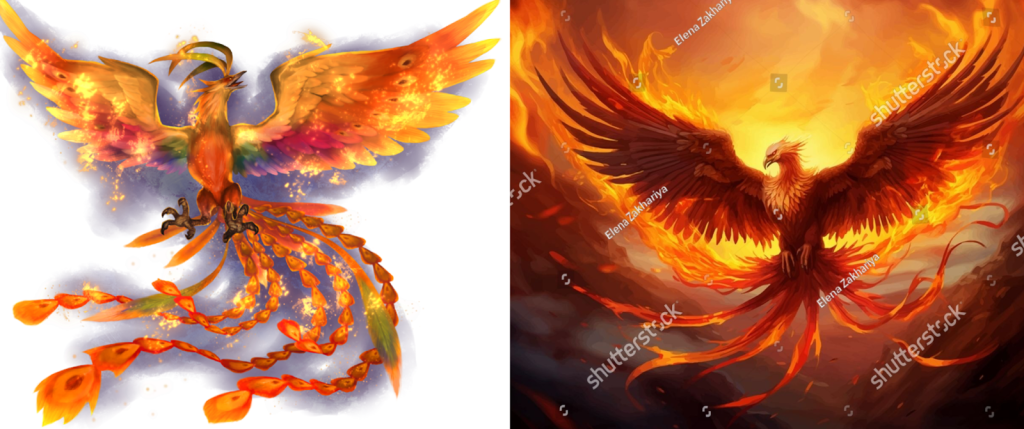
•Islamic mystic Feridüddin Attar narrates the story of Anka in his work “The Conference of the Birds.” A story about the Anka bird is as follows:
“It is rumored that Simurg (Zümrüd-ü Anka or Phoenix), the ruler of birds, lives on the branches of the Tree of Knowledge and knows everything. The special feature of this bird is that its tears are healing, and it dies by burning to ashes, then resurrects from its own ashes.”
For more information, you can watch our YouTube video “The Place of Animals in Mythology” with Dr. Assistant Professor Altan ARMUTAK from Istanbul University Cerrahpaşa.
- Altan ARMUTAK, Doğu ve Batı Mitolojilerinde Hayvan Motifi, 1. Memeli Hayvanlar, İstanbul Üniversitesi Vet. Fak. Derg. Erişim tarihi: 19.09.2023
- Altan ARMUTAK, Doğu ve Batı Mitolojilerinde Hayvan Motifi, 2. Sürüngenler, Balıklar, Kanatlılar ve Mitolojik Hayvanlar, İstanbul Üniversitesi Vet. Fak. Derg. Erişim tarihi: 19.09.2023
- Ayşe Karabey TEKİN, Merve DUYDU, TÜRK MİTOLOJİSİNDE HAYVAN SEMBOLİZMİ VE GELENEKSEL “ŞAHMERAN” FİGÜRÜNÜN SANATA YANSIMALARI, İdil 96 (2022 Ağustos) : s. 1208-1217 Erişim tarihi: 19.09.2023
- Deniz KARAKURT, Türk Söylence Sözlüğü . Erişim tarihi: 09.10.2023
- Merve AKPINAR, Türk Mitolojisindeki Hayvan Figürlerinin Çağdaş Türk Resim Sanatına Yansıması, Yüksek Lisans Tezi. Erişim tarihi: 19.09.2023
- Prof. Dr. Necati DEMİR, Bozkurt ve Ergenekon Destani. Erişim tarihi: 20.09.2023
- Özhan Öztürk. Dünya Mitolojisi. Nika Yayınları. Ankara, 2016 Erişim tarihi: 03.10.2023
- Şakire BALIKÇI, Şahmeran Efsanesi ve Yılan Tılsımlarının Psikanalitik Açıdan Değerlendirilmesi. Uluslararası Folklor Akademi Dergisi. Cilt:1, Sayı:1, 53-64. , Erişim tarihi: 04.10.2023
SOURCES
- https://www.soylentidergi.com/kurt-adam-hikayelerinin-kokenleri/#:~:text=Yunan%20Mitolojisinde%20Kurt%20Adam&text=Lykaon%2C%20birçok%20kaynakta%20Kurt%20Adam,bir%20kurt%20formuna%20dönüştürüldüğü%20söylenir.
- https://ozhanozturk.com/2018/05/05/sleipnir-iskandinav-mitolojisi/
- https://www.dinvemitoloji.com/2021/01/japon-tilki-ruhu-kitsune.html
- https://www.dinvemitoloji.com/2018/10/sekhmet-sakhmet.html
- https://www.soylentidergi.com/dehsetin-hanimi-sekhmet/
- https://www.kulturportali.gov.tr/turkiye/mersin/kulturatlasi/sahmeran-tarsus
- https://www.insancaakademi.com/anubis/
- https://apelasyon.com/yazi/62/zumrud-u-anka-simurg-ruhun-yucelmesi-ve-yasarken-yeniden-dogus#:~:text=Çoğunlukla%20“Anka”%20olarak%20anılmıştır.,spiritüel%20aydınlanmanın%20ve%20reenkarnasyonun%20sembolüdür.”
- <a href=”https://www.freepik.com/free-vector/mythical-creatures-characters-colorful-set_7437924.htm#query=Mythology%20animal&position=1&from_view=search&track=ais”>Image by macrovector</a> on Freepik
- <a href=”https://www.freepik.com/free-vector/flat-2×2-design-concept-with-mythical-creatures_11050801.htm#query=Mythology%20animal&position=21&from_view=search&track=ais”>Image by macrovector_official</a> on Freepik
- <a href=”https://www.freepik.com/free-vector/werewolf-concept-illustration_17718834.htm#query=Mythology%20wolf&position=6&from_view=search&track=ais”>Image by storyset</a> on Freepik
- <a href=”https://www.freepik.com/free-vector/egypt-flat-colorful-illustration_4358617.htm#query=Egypt%20god&position=1&from_view=search&track=ais”>Image by macrovector</a> on Freepik
- İstock, Cebas, Capitoline wolf with Romulus and Remus sculpture isolated
- https://pin.it/72vmszw
- <a href=”https://www.freepik.com/free-vector/centaur-concept-illustration_13858888.htm#query=Centaur&position=36&from_view=search&track=sph”>Image by storyset</a> on Freepik
- Image by <a href=”https://www.freepik.com/free-vector/hand-drawn-werewolf-illustration_31818950.htm#query=Werewolf&position=2&from_view=search&track=sph“>Freepik</a>
Image by <a href=”https://www.freepik.com/free-vector/hand-drawn-greek-mythology-illustration_25794039.htm#query=Hermes&position=4&from_view=search&track=sph“>Freepik</a>
 VETEXPLAIN