
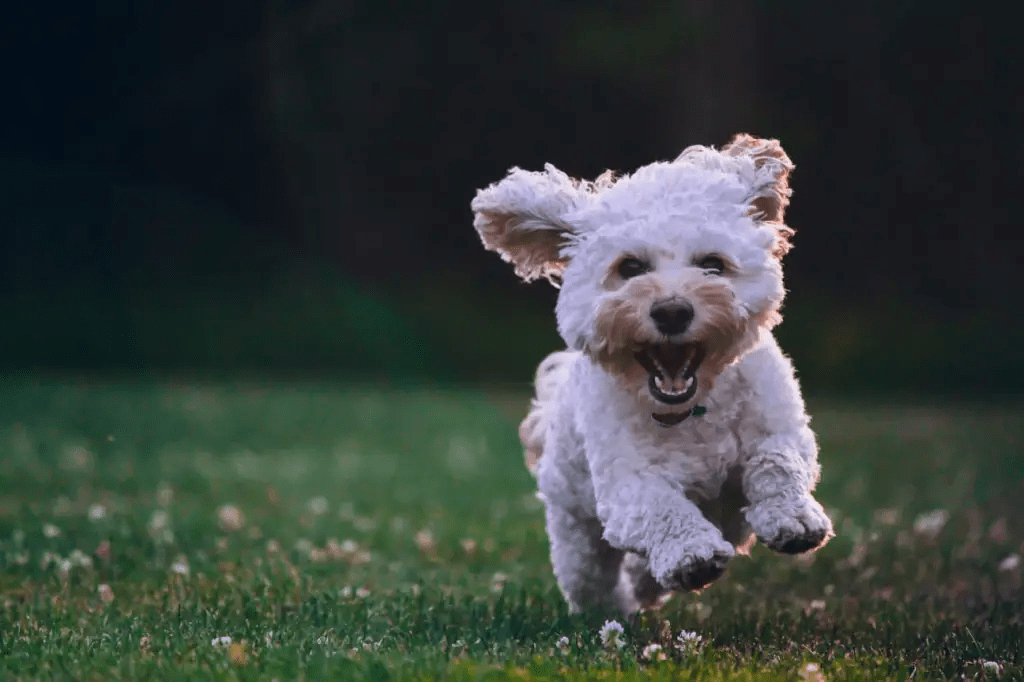
Body language in dogs gives us many signals to understand dogs. These signals strengthen the relationship between dogs and humans. Some behaviors are normal, while others may be a sign of a disease. Misunderstanding the signal given by dogs or not knowing the meaning of this behavior can be uncomfortable and even dangerous for both parties. In this article, we will examine the meaning of some dog behaviors.
Tail position of dogs;
- When the tail is more upright, it indicates that the dog may be aggressive. The higher the tail, the greater the threat.
- When the tail moves to a lower position, the dog is obedient and does not pose a threat.
- When dogs are curious about something, they keep their tails straight in a horizontal position.
- If the tail is tucked tightly between the legs, it means it is afraid.
- When dogs are happy, they keep their tail in its normal comfortable position or in a slightly raised position.
Tail wagging speed of dogs;
The speed at which the tail moves adds more meaning to dog communication.
- We can say that the faster the tail wags, the more excited the dog is.
- If he wags his tail slightly when meeting a new person or another dog, he may be feeling insecure.
- If he is a friendly dog, he can wag his tail more freely, even with his hip movement.
Nodding;
When a dog is relieved of a tense situation, he shakes his head. He may also act this way when he is aggressive or alert.
Closing or slightly opening the mouth;
We can say that your dog is comfortable and happy if it stands in a normal position with its mouth closed or slightly open. However, if the mouth is closed and backwards, the dog may be stressed, scared or in pain.
Showing teeth;
If your dog pulls his lips back to show his teeth, he is aggressive or showing dominance. If this behavior is accompanied by growling, you should know that your dog is very angry. I recommend that you do not approach a dog that displays this behavior.

Rapid breathing;
When your dog starts breathing rapidly, you may think he is overheating. Dogs do this to cool off. This is how they regulate body temperature.
Digging movement;
A dog does this action to bury or unearth valuable items. This action is normal. So you should not worry when you see this behavior. Some dogs also dig to create a suitable area for their puppies.
Bending;
If your dog bends down with his chest and lowers his head to the ground while keeping his rear body up, this means he wants to play. He can shake his hips and tail to emphasize this desire.
Walking in circles before going to bed;
If you see your dog circling before going to bed, you should think that he is looking for the most comfortable place to rest. This behavior may also make you think that there is a disorder in its body.

Barking;
If your dog barks loudly and rapidly, this may be a sign of aggression. A short, soft bark means your dog is friendly. You may suspect that your dog is in pain if he lets out a sudden, sharp bark.
Howling;
If your dog feels lonely, he will let out a long howling sound. Many dogs do this to announce their presence to other dogs or even people. If the howl is short, you may think your dog is pleased or excited.

Movement of their ears;
If your dog is curious, aggressive, or wants to play, he will move his ears forward or upward. If he holds his ears flat and close to his head, he is scared or insecure. He may also be upset if he holds his ears open but not straight.

Sniffing;
If your dog is sniffing the air, he is tracking a threat or prey. A dog sniffing the air does not bark, growl or howl so as not to alert its target. A dog may also sniff other dogs and people to see if they would be friends.
Lifting its paws;
If your dog lift its paws, he wants to play. This behavior is common in young dogs. When a puppy wants to suck milk, it raises its paws and touches its mother.
Licking the genitals;
Animals generally do this behavior for cleaning. If this behavior occurs excessively, you may think there is an infection.
This blog post has been verified by Doctor of Veterinary Medicine Yunus Emre AŞICI.
SOURCES
Siniscalchi M, D’Ingeo S, Minunno M, Quaranta A. Communication in Dogs. Animals. 2023; 8(8):131. https://doi.org/10.3390/ani8080131 Erişim tarihi: 14.09.2023
Jones A. C., Gosling S. D. “Temperament and Personality in Dogs (Canis familiaris): A Review and Evaluation of Past Research”. Applied Animal Behaviour Science. (2023). Erişim tarihi: 14.09.2023
Horwitz D.F., Ciribassi J. Decoding Your Dog: Explaining Common Dog Behaviors and How to Prevent or Change Unwanted Ones. American College of Veterinary Behaviorists. (2023). Erişim tarihi: 14.09.2023
Kaminski J., Bräuer J., Call, J. & Tomasello, M. “Domestic Dogs are Sensitive to a Human’s Perspective”. (PDF). eva.mpg.de. Max Planck. (2023). Erişim tarihi: 14.09.2023
McGreevy Paul D., Georgevsky Dana, Carrasco Johanna, Valenzuela Michael, Duffy, Deborah L., Serpell James A. “Dog Behavior Co-Varies with Height, Bodyweight and Skull Shape”. ncbi.nlm.nih.gov. (2023). Erişim tarihi: 14.09.2023
Miklósi Ádám. Dog Behaviour, Evolution, and Cognition. Oxford: Oxford University Press.(2023). Erişim tarihi: 14.09.2023
Bradshaw John W.S., Blackwell Emily J., Casey Rachel A. “Dominance in Domestic dogs—Useful Construct or Bad Babit?” (PDF). pawsoflife.org. Journal of Veterinary Behavior. (2023). Erişim tarihi: 14.09.2023
Serpell J., Duffy D. Dog Breeds and Their Behavior. In: Domestic Dog Cognition and Behavior. Berlin, Heidelberg: Springer. (2023). Erişim tarihi: 14.09.2023
Udell M. A. R., Dorey N. R., & Wynne C. D. L.”Can Your Dog Read Your Mind? Understanding the Causes of Canine Perspective Taking”. en.wikipedia.org. Learning & Behavior. (2023). Erişim tarihi: 14.09.2023
Topál J., Miklósi Á. and Csányi V. “Dog-Human Relationship Affects Problem Solving Behavior in the Dog”. dx.doi.org. Anthrozoös. (2023). Erişim tarihi: 14.09.2023
Duffy D. L., Serpell J. A. “Behavioral Assessment of Guide and Service Dogs”. Journal of Veterinary Behavior: Clinical Applications and Research. (2023). Erişim tarihi: 14.09.2023




 VETEXPLAIN