
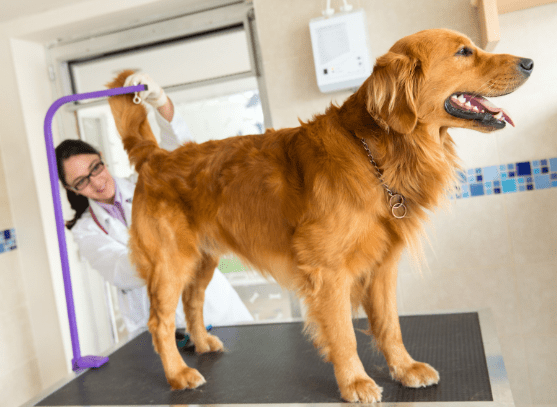
When it comes to the care and maintenance of cats and dogs, the focus is often on coat and skin health, nail care, and oral hygiene.
While the importance of these aspects is undeniable, anal sac health—a crucial issue that, though it affects cats as well, poses more significant problems and negatively impacts the quality of life, particularly in dogs—is frequently overlooked.

So, what are anal sacs, and why should you pay closer attention to their care and health after reading this blog post?
Anal sacs are pouch-like structures located at approximately the four and eight o’clock positions on either side of the anus in carnivorous animals. Each sac has a duct that leads to the opening just inside the anus. The walls of the sacs are lined with numerous sebaceous glands that produce a foul-smelling fluid. This fluid is stored in the anal sacs and later released through the ducts mentioned above. These sacs are often referred to as anal glands and are present in both male and female cats and dogs, regardless of gender.
What are the functions of the anal sacs?
The primary function of the anal sacs is to store the produced fluid until it is discharged. The actual functions lie within the fluid itself.
The release of this fluid occurs when it is squeezed out during bowel movements as the stool passes through the intestines, aided by the contraction of muscles. This fluid also imparts a “scent signature” to the stool.
Anal sac secretions help ward off enemies, alert other animals to their presence, and facilitate easier defecation. The odor is similar to that of rotting fish, which is why dogs and cats are so interested in sniffing each other’s rear ends or feces.

What is Anal Sac Inflammation?
Anal sac inflammation, also known as anal sacculitis, is a condition that is relatively rare in cats but much more common in dogs. It typically occurs when the ducts become inflamed, infected, or when abscesses form in the sacs. Additionally, adenocarcinomas, a type of malignant tumor that tends to recur and has an apocrine nature, can also develop in the anal sacs.
In affected sacs, the secretion thickens, causing the sacs to swell and making defecation painful. The substance secreted within the anal sacs provides an ideal environment for bacterial growth, which can lead to abscess formation.
Normally, bacteria present in the stool can easily travel up the ducts and enter the sacs. However, during regular bowel movements, the secretions are expelled, which also helps remove the bacteria. If the sacs and ducts become blocked, the fluid doesn’t drain properly and becomes infected. The fluid can then enter the bloodstream, eventually filling the sacs with pus and forming an anal sac abscess.
In anal sac inflammation, blockage, infection, and abscess formation are sequential stages.
What are the Symptoms of Anal Sac Inflammation?
The most noticeable early symptom is itching caused by irritation. As a result, you may observe frequent scooting (dragging the rear on the ground), tail chasing, and an increased desire to lick the area.

In dogs, the scooting behavior, which involves dragging their bottom across the floor, is a typical manifestation of this irritation.
In advanced cases, swelling, redness, and pain in the area are common findings. When the sacs become infected, inflamed, and overly full, painful and difficult defecation may occur.
Additionally, you might notice blood and pus in the stool. In more severe cases, anal fistulas can develop.

How is Anal Sac Disease (Inflammation) Treated?
Treatment for anal sac diseases varies depending on the stage of the condition. In all stages, the treatments described below should be conducted and overseen by a veterinarian.
In cases of mild swelling, itching, and irritation (as indicated by scooting), manual expression of the sac by a veterinarian may be sufficient to resolve the issue.
However, if an infection is present, in addition to expressing and flushing the sac, appropriate medical treatment is necessary.
In more complicated situations, such as when there is abscess formation, fistulization, or an inability to clear the duct obstruction, treatment may require surgical removal of the sac.
This blog post has been verified by Doctor of Veterinary Medicine Yunus Emre AŞICI
SOURCES
Samsar,E. ve Akın,F. 1998. Özel Cerrahi. Tamer Matbaacılık, Ankara
Ünsaldı E., Bulut S., Durmuş A.S. ve Köm M. 1999. Köpeklerde deneysel olarak anal keselerin ekstirpasyonunda akrilik kullanılması. F.Ü. Sağlık Bil. Derg., 13(2): 127-130.
Yücel,R. 1992. Veteriner Özel Cerrahi. Pethask Veteriner Hekimliği Yayınları Gebze/Kocaeli

 VETEXPLAIN