
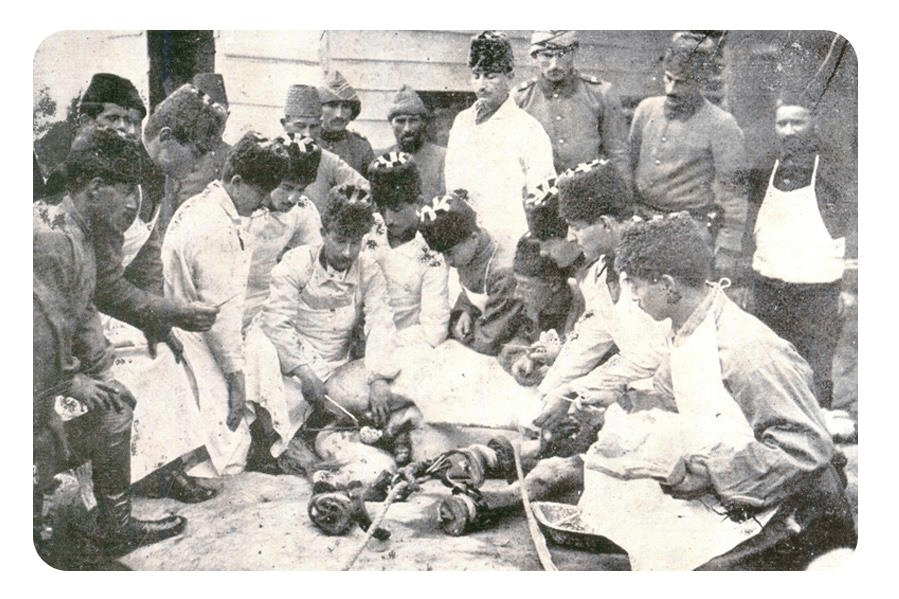
The history of Veterinary Medicine in Turkey has generally been examined without distinguishing between military and civilian branches. At the same time, the first Veterinary School in Turkey was established in 1842 to meet the needs of the military. The founding of this school marks the first scientific connection with European Veterinary practices.

Sultan Mahmud II, in his efforts to ensure the sustainability of his reforms, found it necessary to abolish the Janissary Corps, and shortly thereafter facilitated the establishment of the Medical School. Even before the Tanzimat period (1839), he had linked the future of the Ottoman Empire to the resolution of national education issues. As a result, he emphasized the importance of education and incorporated the military into this system. He sent personnels to Europe to learn military arts and, in a manner similar to European systems, established a new army. Additionally, since 1762, many Veterinary doctors trained in European Veterinary schools had been serving in the Empire.
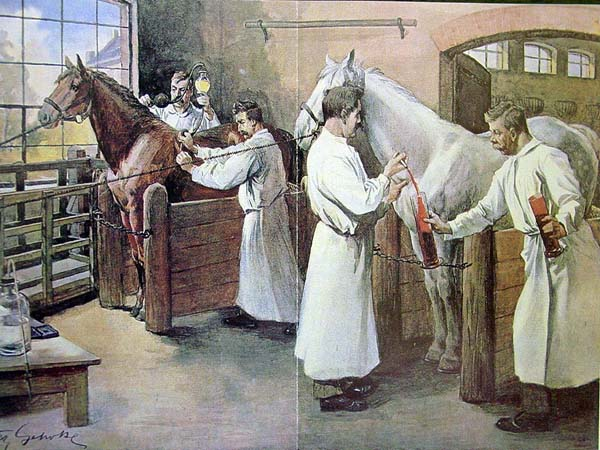
Later, after the declaration of the Tanzimat and the implementation of necessary reforms, Prussian Royal Army Veterinarian Godlewsky arrived in Istanbul in 1842 to contribute to Veterinary education. The Military Veterinary School was established at this time. Godlewsky provided the instruction at this school, and in its first session, lessons were conducted with 12 students and a translator. The program lasted for three years and was completed in 1845. The first training given under these circumstances took place under very difficult conditions. The reason for this was that the students had only learned enough literacy to write, and the translator lacked sufficient knowledge of the subject matter.

Later, in 1845, 32 students were sent, but 15 of them were not admitted to the school due to their inability to read or write. By 1848, the training for this cohort was completed. During this period, when the Military Veterinary School was under the same roof as the Military Academy, Dubroca was brought from France in 1849, and the duration of the program was extended to four years, offering a more comprehensive curriculum. Other foreign veterinarians were also brought in; Lewis in 1858, George in 1866, and Dezutter in 1884.
The Military Veterinary School, until it moved into its independent buildings in 1909, frequently changed locations due to various reasons, often alternating between the Military Academy and the Medical School. Particularly, strong relationships were established between the faculty of the Medical School, and cooperation took place in the writing of textbooks.
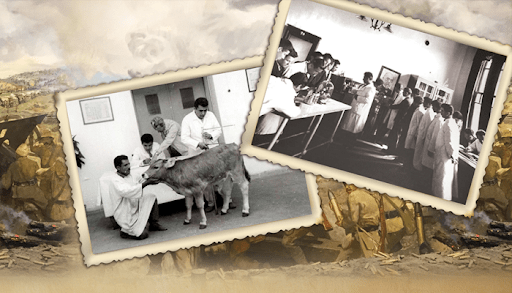
In 1890, an examination was held between the first and second-year students; the top four winners were sent to the Alfort Veterinary School, returning to the country in 1895.
Due to the inability of the Military Veterinary School graduates to meet the country’s needs and prevent animal diseases among the public, the establishment of a Civilian Veterinary School became a necessity. Recognizing this need, Veterinary Lieutenant Colonel Mehmet Ali Bey took the initiative and established the first Civilian Veterinary School in 1889, appointing himself as its director. Among the first graduates of the Civilian Veterinary School in 1893 was Mehmet Akif Ersoy, who graduated as the top student. In 1909, the school’s director sent civilian Veterinarians to Europe for specialized training and later included those who returned in the faculty of the civilian school.
War Years (1914-1923)
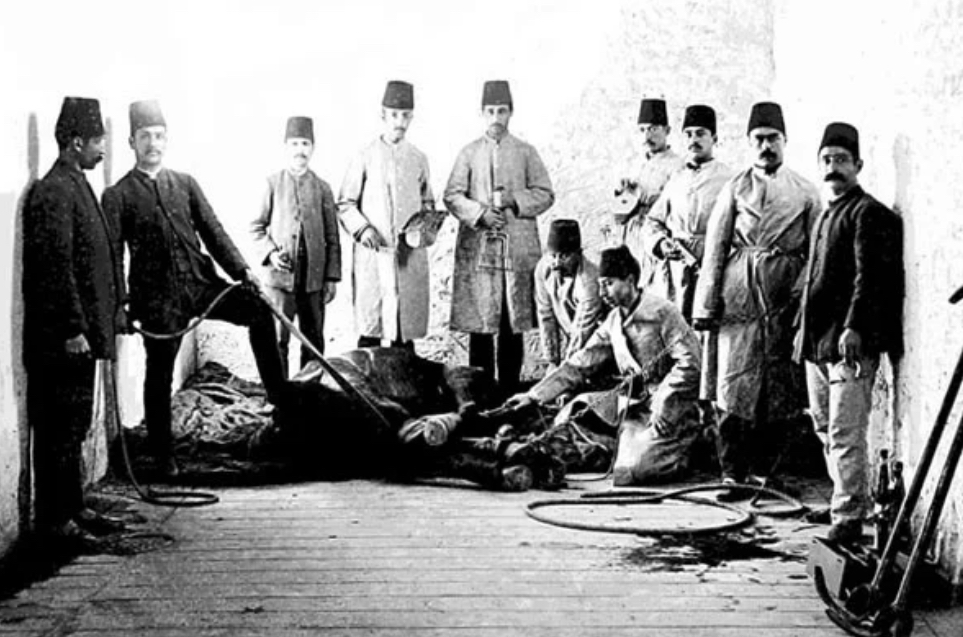
The First World War was entered with a 72-year accumulated experience in military Veterinary Medicine. This accumulation was the result of initiating international relations, continually developing existing organizational structures to meet the needs of warfare, and conducting significant research in the bacteriology institutions that had been established.
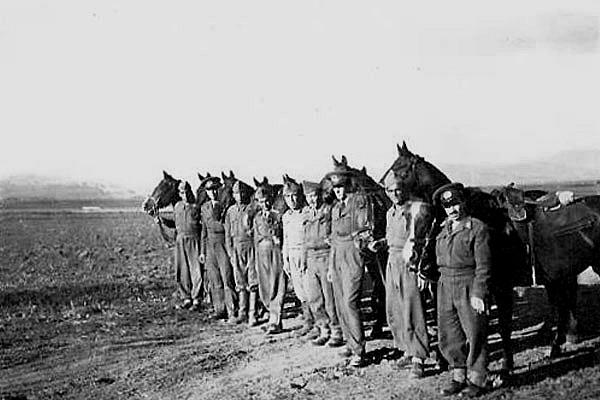
During the war, Veterinary Doctors played a significant role in the treatment, care, nutrition, and prevention of zoonoses, as well as in food inspections for cavalry horses, which were vital to the army’s operational strength, and for pack animals used in logistics and transportation, both of which were crucial to the military efforts.
However, due to the war conditions and a shortage of trained personnel, efforts to combat epidemic animal diseases were insufficient. According to the State Statistics Institute, the total livestock population, which was 45,000 at the beginning of the war, had decreased to 19,000 by the end of the war, representing a reduction of 57.7%. Before the War of Independence, it was determined that 176 Veterinary Doctors and 59 assistant Veterinarians were employed in the Civil Veterinary Organization. During the war years, a new organization was established in military veterinary medicine. On June 14, 1920, the “Directorate of Veterinary Affairs” (Umur-i Baytariyye Müdüriyeti) was founded, and the official relationship with the Veterinary Office in Istanbul was severed. Most of the Veterinarians from Istanbul and other institutions moved to Anatolia to join the National Army.
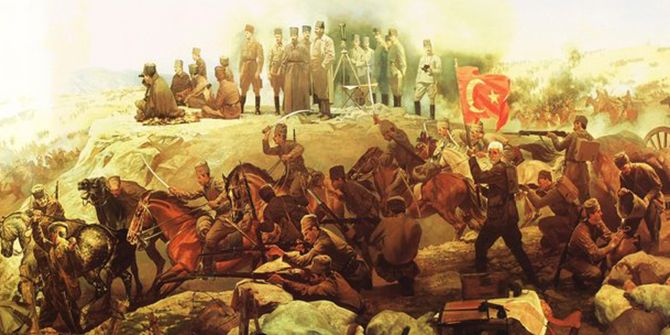
After the Civil Veterinary School was destroyed by fire in 1920, the issue of merging the Civilian and Military Veterinary Schools was brought to the agenda. Following prolonged discussions, it was decided that the Military Veterinary School would be completely abolished, and all its equipment would be transferred to the Civilian Veterinary School.
SOURCES
Aytaç ÜNSAL ADACA, Veteriner Hekimliği Tarihi, Erişim tarihi: 09.01.2024
Erhan YÜKSEL, “Askeri Ceride-i Baytariyye” Adlı Derginin Veteriner Hekimliği Tarihi Açısından Değerlendirilmesi, Erişim tarihi: 09.01.2024
Ferruh DİNÇER, Türkiye’de Askeri Veteriner Hekimlik Tarihi Üzerinde Araştırmalar, A.Ü. Veteriner Fakültesi Veteriner Tarihi ve Deontoloji Kürsüsü, Erişim tarihi: 09.01.2024
Recep ASLAN, Osmanlı’dan Cumhuriyet’e Veteriner Hekimlik Eğitimi: Bir Mektup Analizi, Kocatepe Vet J (2016) 9(4), Erişim tarihi: 09.01.2024
R.Tamay BAŞAĞAÇ GÜL, Türkiye’de İki Dünya Savaşı Arasında Veteriner Hekimliği Hizmetleri ve Hayvancılık Politikaları Üzerine Araştırmalar, Erişim tarihi: 10.01.2024
INTERNET RESOURCES
https://veterinerhekim.com.tr/veteriner-hekimlik-tarihi/ Erişim tarihi: 09.01.2024

 VETEXPLAIN