

Diabetes mellitus is a disease characterized by the inability of the body to produce sufficient amounts of insulin, which is produced by the beta cells of the Langerhans islets in the pancreas, or the inability of the body to effectively utilize the insulin it produces.
Cells require fuel in the form of either fat or sugar to carry out their daily activities. Some tissues can utilize either sugar or fat, while others are almost entirely dependent on sugar as their fuel source. Diabetes is fundamentally related to this metabolism.
Without a hormone called insulin, tissues cannot take up glucose.
Insulin is produced by the pancreas as part of the body’s natural blood sugar regulation. Insulin acts as a key that unlocks the door, allowing sugar in the bloodstream to enter the body’s cells. Once glucose enters the tissues, it can be burned as fuel or stored, but without insulin, the sugar remains in the bloodstream and cannot be used by the body.

Classification of Diabetes Mellitus
In humans, diabetes is classified as type 1 insulin-dependent diabetes mellitus and type 2 non-insulin-dependent diabetes mellitus. This classification has been found to be of limited use in veterinary medicine, as almost all dogs with diabetes require insulin, regardless of the underlying cause.
Type 1 diabetes is most commonly seen in dogs, while type 2 is more frequently observed in cats. Other specific types of diabetes can be seen in both cats and dogs.
Type 1 or Insulin-Dependent Diabetes Mellitus:
This is the most common type of diabetes in dogs. It is characterized by the inability of the body to produce sufficient amounts of insulin. This results from damage to, or dysfunction of, the Langerhans islets in the pancreas. It may be caused by genetic factors, environmental influences, pancreatic inflammation, or immune-mediated damage.
Type 2 or Non-Insulin-Dependent Diabetes Mellitus:
This is the most common form of diabetes in cats. It is characterized by two factors: insulin resistance and abnormal insulin secretion. Resistance to insulin develops in the target tissues. In this type of diabetes, both insufficient and excessive insulin secretion can occur. In the early stages of the disease, there is an overproduction of insulin, although glucose concentrations remain normal. As the disease progresses, insulin secretion becomes insufficient to control glucose levels, resulting in increased blood glucose concentrations. The resulting hyperglycemia leads to constant and severe stimulation of the beta cells, which causes functional loss in these cells and insufficient insulin secretion.
Type 3 (Gestational Diabetes):
Gestational diabetes is a rare condition in dogs. It typically occurs in the second half of pregnancy, especially in middle-aged dogs.
Type 4 (Secondary Diabetes Mellitus, Type S):
Many cases of diabetic syndromes appear secondary to other diseases. The most significant causes include pancreatic disorders or the removal of the pancreas.
Causes of Diabetes in Dogs and Cats
The development of diabetes mellitus is influenced by both genetic and environmental factors. Diabetes mellitus is more commonly observed in dogs aged four years and older, with rare occurrences in puppies. In cats, the disease is more frequently seen in middle-aged and older individuals. Diabetes is a common condition in both cats and dogs and is not attributed to a single cause. Underlying conditions such as obesity, pituitary disorders, and adrenal diseases may predispose animals to the development of diabetes. Medications such as steroids can also trigger diabetes in both dogs and cats.
Symptoms of Diabetes in Dogs and Cats
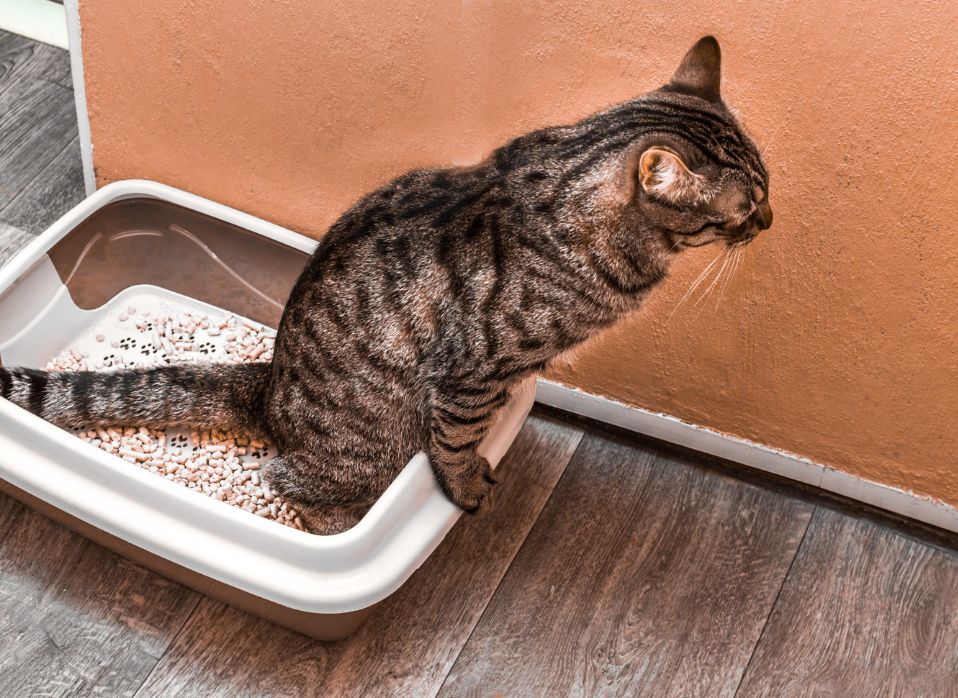
Regardless of the underlying cause, all cases of diabetes mellitus lead to elevated blood sugar levels that spill over into the urine, resulting in a predictable set of clinical symptoms. The most common signs of diabetes in dogs and cats include:
– Increased Hunger or Appetite (Polyphagia)
– Excessive Thirst (Polydipsia)
– Increased Urination (Polyuria)
– Weight Loss
– Weakness or Fatigue
Diabetes mellitus typically begins insidiously and follows a chronic course. In cats, neuropathic disturbances may develop in the distal regions of the limbs. In animals with diabetic ketoacidosis, signs such as dehydration, depression, vomiting, tachypnea, and a fruity odor of acetone in the breath may be observed.
Animals with diabetes have reduced resistance to bacterial and fungal infections. As a result, symptoms related to the urinary and respiratory systems, as well as skin lesions, are commonly seen.
In mild cases, significant clinical signs may not be apparent. However, cataracts may progress over time, eventually leading to blindness. Death can occur as a result of weakness, diabetic coma, or secondary infections.
Do Dogs Go Blind from Eating Sugar?
While the belief that dogs will go blind from consuming sugar is common in popular folklore, this is not entirely accurate. Diabetes in dogs can be triggered by long-term consumption of sugar or the development of obesity, but it is not directly caused by sugar intake. The blindness associated with diabetes typically results from cataracts, which can develop as a complication of untreated diabetes. If left untreated, these cataracts can progress to blindness. In summary, the idea that eating sugar causes blindness in dogs is actually linked to the onset of diabetes itself, which can lead to cataract formation and, if untreated, to vision loss.
This blog post has been verified by Doctor of Veterinary Medicine Yusuf ERTOSUN.
SOURCES
M Hoenig.”Comparative aspects of diabetes mellitus in dogs and cats”.Molecular and Cellular Endocrinology,Volume 197, Issues 1-2,
(2002).221-229.(2023)
https://doi.org/10.1016/S0303-7207(02)00264-2.
Jacquie S. Rand, Linda M. Fleeman, Heidi A. Farrow, Delisa J. Appleton, Rose Lederer.
“Canine and Feline Diabetes Mellitus: Nature or Nurture?”.The Journal of Nutrition,Volume 134, Issue 8,(2004).2072-2080.(2023)
https://doi.org/10.1093/jn/134.8.2072S
Şimşek A,İçen H.”Kedi ve Köpeklerde Diabetes Mellitus”.Dicle Üniversitesi Veteriner Fakültesi Dergisi.(2008)1(1):23-28.(2023)
Vurkaç N, Şahinduran Ş. 2018. Köpeklerde Diabetes Mellitus. MAKÜ Sag. Bil. Enst. Derg. 6(1): 43-50.(2023)
https://doi:10.24998/maeusabed.329298
https://veterinarypartner.vin.com/default.aspx?pid=19239&id=4951506



 VETEXPLAIN
Yorum bırakın