
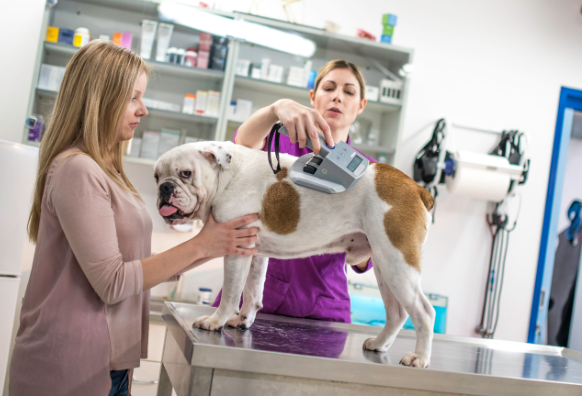
The digital identification of owned pets, commonly referred to as microchipping, has significantly enhanced the safety of our furry companions in various aspects.
What is the microchipping process?
Microchipping involves implanting a grain-sized microchip, containing a unique 15-digit identification code, under the skin between the shoulder blades or near the base of the left ear in cats, dogs, and ferrets. This procedure is performed using a syringe and is no more painful than a routine subcutaneous injection. It does not require anesthesia or surgical intervention and can be easily completed during a routine veterinary visit.
Why should we microchip our pets, and what are the benefits?
One of the most distressing scenarios for pet owners is the loss or escape of their beloved companion. In such cases, it is mandatory to report the situation to the Provincial/District Directorate of Agriculture and Forestry within seven days. This ensures that the pet is marked as “Lost” in PETVET (the Pet Registration System), visible to all users.
Through microchipping, anyone who finds a lost pet can take it to a private clinic or the Provincial/District Directorate of Agriculture and Forestry. Using a microchip reader, the pet’s identification code can be accessed, allowing retrieval of essential information such as the pet’s name, passport number, address, vaccination schedule, history of surgical procedures, ownership details, and the owner’s contact information. This makes it easier to reunite the pet with its owner. It is crucial to ensure that the contact information registered in the system is always current and accessible. However, it is important to note that microchips are not GPS devices, so concerns about privacy invasion are unfounded.
Another significant benefit of digital identification is its role in deterring pet abandonment. Here’s how the process works: when an abandoned or lost pet is identified, the owner is notified and given 72 hours to retrieve their pet. Owners who fail to reclaim their pet within this timeframe face administrative fines. If the finder does not wish to adopt the animal, it is transferred to the nearest municipal animal shelter.
Is there an ideal time for microchipping pets?
Pets under six months of age must be microchipped and registered in PETVET at private clinics or the Provincial/District Directorate of Agriculture and Forestry. For pets older than six months, registration is possible after paying the administrative fine imposed by the Directorate. However, if you adopt a pet from the street, no penalties apply, and the animal can be microchipped regardless of age.
Addressing common concerns:
• Microchips operate using passive radio waves, meaning they are not constantly active and pose no health risks to your pet.
• If you plan to travel abroad with your pet, microchipping, along with a pet passport and PETVET registration, is a mandatory requirement. For detailed information on traveling with your pet, you can access our dedicated blog post [here].
Microchipping, or digital identification of owned pets, has made our companions’ lives significantly safer. In this article, we have outlined the details of the microchipping process and its numerous benefits for pet owners and their furry friends.
This blog post has been verified by Doctor of Veterinary Medicine Yusuf DOĞRU.
SOURCES
American Veterinary Medical Association. “Microchipping FAQ”. Erişim: 20.09.2023 https://www.avma.org/resources-tools/pet-owners/petcare/microchips-reunite-pets-families/microchipping-faq
TC Tarım ve Orman Bakanlığı. “Sahipli Hayvanların Dijital Kimliklendirilmesi”. Erişim: 20.09.2023 https://www.tarimorman.gov.tr/Haber/5652/Sahipli-Hayvanlarin-Dijital-Kimliklendirilmesi#:~:text=SORU%3A%20Mikro%C3%A7ip%20nas%C4%B1l%20uygulan%C4%B1yor%3F,deri%20alt%C4%B1na%20enjekt%C3%B6r%20vas%C4%B1tas%C4%B1yla%20uygulanmaktad%C4%B1r.



 VETEXPLAIN