
Abstract
Prions are infectious proteins that were unexpectedly discovered in 1982. Prions also symbolised with PrPSc cause many diseases characterised by neurodegeneration and lethality. Since prions aren’t actually living organisms, the way they technically “reproduce” is by stimulating the conversion of proteins very similar in content to the disease-causing prion proteins. In this article we aim to gain an understanding of prions as a whole and how we can protect ourselves and our pets.
Transmission
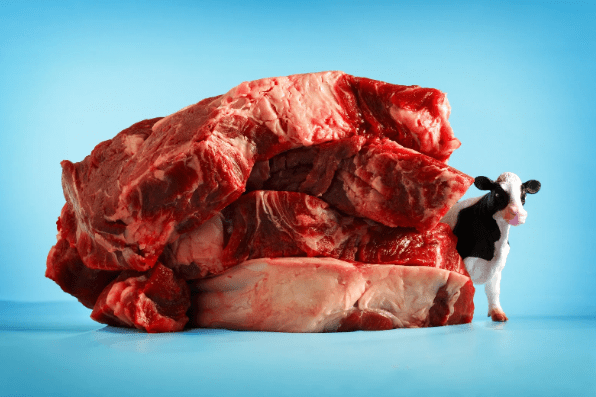
The way prions spread from animal to animal or quite rarely, animal to human is what makes the job of veterinarians that work in abattoirs and farms even more important. Prions may spread by the consumption of infected produce such as meat. Although ingestion is the primary method of infection between species, they generally form in organisms that have a specific gene that has a higher possibility of forming faulty proteins that will become prion proteins. Researchers at The University of Texas Health Science Center at Houston discovered that plants can also be a vector to prions.
Many research results have concluded that prions resist degradation and can linger in the environment for years, and even an enzyme that is specifically synthesised to break down complex proteins known as proteases does not degrade them. Certain experiments have yielded that unbound prions degrade over time while soil bound prions remain at stable or increasing levels, suggesting that prions likely accumulate in the environment.
Proteins that show prion-like behaviour can also be found in some types of fungi but fungal prions do not always cause disease in their hosts.
Sterilisation
Most soaps, disinfectants and cleaning agents are meant to kill microorganisms by destroying bacteria cellular wall or creating an environment where the bacteria cannot continue vital procedures. The problem with prions is that they aren’t microorganisms therefore cannot be removed with most traditional methods. Most methods of destroying prions rely on laboratory equipment but strongly acidic detergents seem to do a good job.
Treatments
There are no effective treatments for not only humans but for other animals as well. For example if a cow has somehow either contracted or genetically developed BSE (Bovine Spongiform Encephalopathy), they are immediately removed from the farm and exposed in a way that the prions in its nervous system cannot spread to nearby organisms.

This is done by either burning the carcass or burying it in a pit specifically designed to seep nothing into the surrounding area. Although some treatment methods have shown promise to a cure none have been effective against an already progressed prion case.
Prion’s role in diseases
Prions cause neurodegenerative disease by aggregating in the spaces between cells in the central nervous system to form plaques known as amyloids, which disrupt the normal cell activity in the region. This disruption is characterised by “holes” in the tissue that causes the tissue’s pathological spongy architecture. While the incubation period for prion diseases is relatively long (5 to 20 years), once symptoms appear the disease progresses rapidly, leading to brain damage and an inescapable death. Neurodegenerative symptoms can include convulsions, dementia, ataxia (balance and coordination dysfunction), and behavioral or personality changes.
Many different mammals can be affected by prion diseases, as the prion protein is very similar in all mammals. Due to small differences in PrP between different species it is unusual for a prion disease to transmit from one species to another. The human prion disease variant Creutzfeldt-Jakob disease, however, is thought to be caused by a prion that typically infects cattle, causing bovine spongiform encephalopathy and is transmitted through infected meat.
This blog post has been verified by Res. Asst. Dr. Özge AYDIN.
Sources
1.Stanley B. Prusiner, “Prions”, 1-10, (1998)
2.Stanley B. Prusiner, Scientific American 272, 48-57, (1995)c


 VETEXPLAIN