
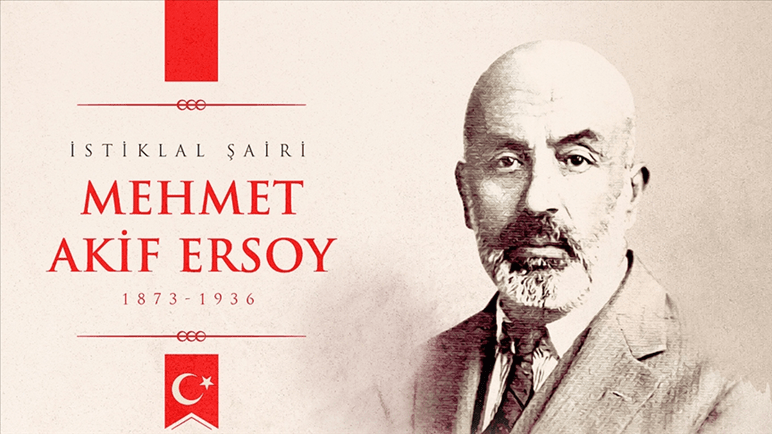
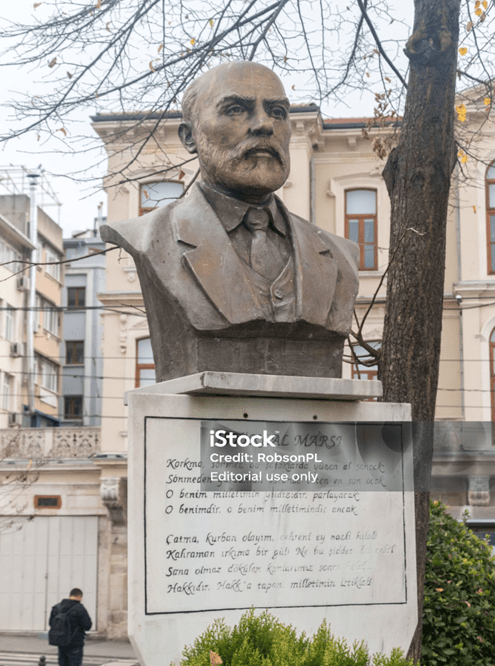
A Legendary Figure in Turkish-Islamic History Mehmet Akif Ersoy is a legendary hero whose name is inscribed in golden letters in Turkish-Islamic history and will be remembered as long as the Republic endures. Known as the National Poet, he was born on November 22th, 1873, in Fatih, Istanbul. His mother was Hace Emine Şerife Hanım from Tokat, and his father was Tahir Efendi, a scholar at the Fatih Madrasah.
He was not only a poet, writer, orator, intellectual, and thinker but also a highly respected veterinarian. In fact, he graduated as the top student from the first Civilian Veterinary School, which was established in 1889. He actively practiced veterinary medicine for 20 years with dedication and passion.
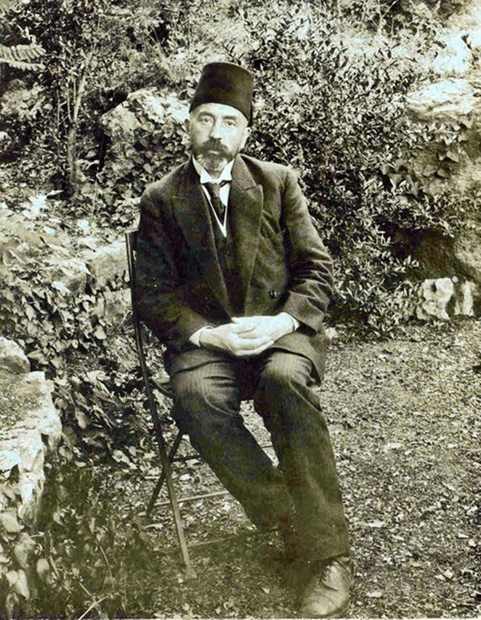
Mehmet Akif Ersoy’s Education and Veterinary Career
• In 1882, at the age of 9, he developed an interest in poetry while studying at Fatih Merkez Rüştiyesi (middle school).
• In 1885, he enrolled in Mülkiye İdadisi (high school) and completed his studies in 1888. He was eligible to continue at the Mülkiye-i Aliye (higher division of the Civil Service School). However, after his father’s death, financial difficulties prevented him from continuing his education there.
• To secure a more stable career, he enrolled in the Veterinary School as a boarding student in 1889. During this period, his interest in poetry grew, and in 1892, he wrote his first known poem, Destur.
• Emin Erişirgil (1986) narrates Mehmet Akif’s decision to enroll in veterinary school in his own words:
“After finishing Fatih Merkez Rüştiyesi, my father gave me the freedom to choose my academic path. I preferred to enter Mülkiye. However, the structure of Mülkiye changed that year. It became a three-year preparatory school and a two-year higher education program. When I reached the first year of the higher section, my father passed away, and our house burned down. I could have pushed through and completed my studies at Mülkiye, but that same year, the Civilian Veterinary School was established. To encourage young students to enroll, graduates were promised a salary of 800 kuruş. Those graduating from Mülkiye received a lower salary. So, together with a few friends, I chose this school and enrolled.”
• During his education at the Civilian Veterinary School, Mehmet Akif was significantly influenced by scientific advancements and laboratory studies.
• The year he started, Rıfat Hüsamettin, a professor returning from Paris, introduced microbial culture studies to the Halkalı Veterinary School. Mehmet Akif learned about Pasteur’s scientific contributions and also embraced his ethical values.
• On December 22, 1893, he graduated as the top student from the Halkalı Veterinary and Agricultural School—Turkey’s first Civilian Veterinary School.

Veterinary Career and Contributions
• On December 26, 1893, he started working as the Assistant General Inspector of Animal Breeding and Veterinary Affairs under the Ministry of Forestry, Mines, and Agriculture.
• He served in this role for 20 years (1893-1913) and traveled extensively across Anatolia, Rumelia, and Syria on behalf of the ministry.
• In 1908, he co-founded the first veterinary association, the Ottoman Veterinary Scientific Society (Osmanlı Cemiyet-i İlmiye-i Baytariyesi), and served as its Vice President.
• He was also on the editorial board of the journal Mecmua-i Fünun-u Baytariye, which was published by the association.
• Mehmet Akif expressed his love for veterinary medicine through his poetry, as seen in his dialogue with Köse İmam:
“Some call me a heretic… That’s what I hear most.
— Is there more, Imam?
— Yes, but I forgot: a veterinarian!
— I wish I had pursued veterinary medicine…
— You still can.
— I can’t.
— Maybe you could have…
— I forgot, Köse!
— If only you had remembered, it’s so essential!
— Listen to me, my son, if you still can, work for it:
Because if you tried, you’d understand—
We need veterinarians more than human doctors.”
• As a veterinarian, he actively fought against livestock epidemics, particularly cattle plague, in Thrace and Anatolia.
• For four to five years, he also taught at a private school called Dar’ül Edeb.
• He was part of a military commission tasked with selecting horses for the army in Damascus, Aleppo, and Adana.
Resignation from Veterinary Service
• He resigned twice from his veterinary position: first in 1911 and then in 1913.
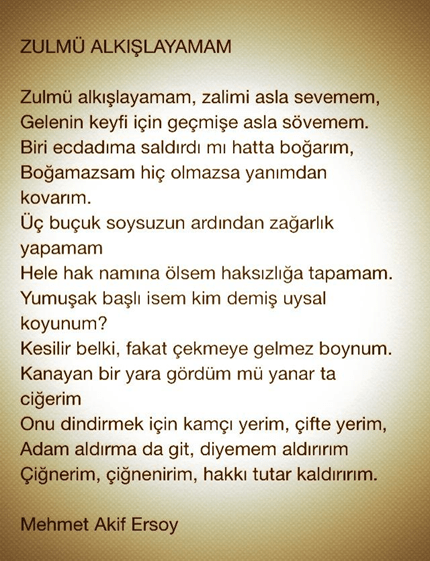
1. First Resignation (1911)
• Mehmet Akif prepared the exam questions for a veterinary appointment. However, he was falsely accused of favoritism.
• Upon hearing that the candidate’s appointment was revoked, Mehmet Akif resigned in protest.
• Later, the accusation was proven false, and the candidate was reinstated. Mehmet Akif also returned to his post.
2. Second Resignation (1913)
• The Veterinary Bacteriology Institute was initially planned for Pendik, but the minister later decided to relocate it.
• Mehmet Akif’s mentor and director, Abdullah Bey, opposed this decision and was forced to resign.
• In response, Mehmet Akif also resigned in protest, stating:
“To the Esteemed Ministry of Forestry, Mines, and Agriculture,
I am resigning from my position due to the unjust dismissal of Veterinary Director Abdullah Efendi over the bacteriology institute matter, in which he is entirely justified.”
• Following his resignation, the institute was built in Pendik as originally planned. The minister later asked him to return, but Mehmet Akif refused out of principle.
Legacy in Veterinary Medicine
• In 1935, he wrote to Şefik Kolaylı, suggesting that graduates should continue their education for an additional five to six months to enhance their expertise.
• His vision for postgraduate education was ahead of its time, emphasizing the importance of lifelong learning.
• Even after leaving the veterinary profession, he continued serving his country as a nationalist, freedom fighter, journalist, parliamentarian, and religious scholar.
• On December 27th, 1936, he passed away at the age of 63 in Beyoğlu, Istanbul.
References:
- Doç. Dr. Çağrı Çağlar Sinmez, Ali İlteriş Aykun,Veteriner Hekimliğin Mehmed Âkif Ersoy’un Şairliği ve Aydın Kimliği Üzerine Etkisi Erişim tarihi: 09.12.2023
- E. Sedat Arslan, Mehmet Akif Ersoy’u Veteriner Hekim Olmaya Götüren Sebepler ve Veteriner Hekimlik Yaparken Gösterdiği Etik Tutumlar,Adnan Menderes Üniversitesi Veteriner Fakültesi Veteriner Hekimliği Tarihi ve Deontoloji Anabilim Dalı, Aydın, Türkiye Erişim tarihi: 09.12.2023
- Prof. Dr. Ömer AKBULUT, Veteriner Hekim Olarak Mehmet Akif Erişim tarihi: 09.12.2023
- Yrd.Doç.Dr. Çağrı Çağlar SİNMEZ, VETERİNER HEKİMLİĞİ YÖNÜYLE MEHMET AKİF ERSOY, Tokat Veteriner Hekimler Odası Erişim tarihi: 09.12.2023

 VETEXPLAIN