

The relationship between animals and humans dates back to ancient times. This connection, which goes as far back as primitive ages, has continued for both social and economic purposes. Today, many people live with their pets such as cats, dogs, or birds. You have probably heard that our pets, who share our living spaces and have become members of our families, affect our mental health in many ways. Let’s take a look at these effects.

Sociologists studying linguistics and other cultural elements have found that there is a distinct, often overlooked animal effect on our social lives and behaviors. For example, the philosopher Descartes commented on this issue by stating that the fundamental difference between humans and animals is that voluntary behavior is unique to humans; animals, on the other hand, respond to stimuli with reflexes, meaning automatic reactions. Therefore, animals are fundamentally different from humans because they lack a mind.
Recent research shows that pets accompany their owners as an important source of social support, providing many psychological and physical benefits. In addition to psychological well-being, scientific research in the field of medicine has shown that owning and bonding with a pet offers many health benefits for humans.
Studies show that pets have many positive effects on children such as mental and social development, taking responsibility, and improving cognitive abilities. They are also more likely to engage in activities like sports or hobbies, and children who grow up with pets tend to be more successful in developing empathy and social adaptation.
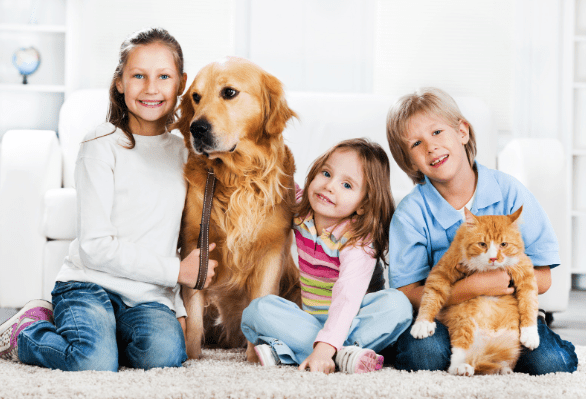
Animals have also been found to be effective therapeutic companions in treating basic problems like loneliness during childhood and adolescence, as well as in more complex disorders such as autism.
In addition, individuals who have spent their childhoods caring for plants and animals and playing in nature tend to be more sensitive to environmental issues later in life compared to those who did not engage in such activities.
One study found that pet ownership reduced the risk of death related to heart attacks.
In stressful situations such as hospitalization, pets have been observed to reduce physiological arousal in children during treatment, helping them cope better with stress and illness in a hospital setting.
The positive effects of keeping pets are also seen in adults as well as children and adolescents. In one study, pet-assisted therapy helped people with AIDS maintain feelings of value, self-esteem, and hope, with positive results.
In a semi-experimental field study, the effects of a forensic human-animal interaction (HAI) program on the criminal behavior of prison inmates were evaluated. Positive behavioral and psychosocial outcomes were observed in 48 adult male inmates who participated in the program.
It has also been found that pet ownership reduces stress, lowers blood pressure, triglyceride, and cholesterol levels, and contributes positively to children’s emotional development and ability to empathize. In addition, animal-assisted therapy has been reported to improve cardiopulmonary pressures, neurohormone levels, and anxiety in patients hospitalized for heart failure.
In a study on anxiety, it was reported that individuals who watched an aquarium during a dental procedure were more relaxed and less anxious than those who did not.
Another study found that people with pets visited the doctor less often over a one-year period than those without pets. It has also been observed that pets provide support to their owners during stressful times. Dog owners, compared to other pet owners, spend more time with their pets and consider them more important. For this reason, dogs are more likely than other pets to be chosen as attachment figures by their owners and to form friendships with them.

When it comes to the effects of human-animal interaction, it is possible to mention the following:
- A reduction in stress-related parameters such as epinephrine and norepinephrine
- Improvement in immune system function and pain management
- Increased trust toward others
- Reduced aggression
- Enhanced empathy and improved learning
In summary, human-animal companionship, particularly through dogs or animal-assisted therapy, has numerous positive effects on people of different ages. These include interpersonal benefits such as human interest and prosocial behavior; reductions in stress-related parameters like cortisol, heart rate, and blood pressure; improvements in emotional states such as fear and anxiety; and overall contributions to both mental and physical health.
This blog post has been verified by Veterinarian Yunus Emre AŞICI
Sources
Beetz,A.;Uvnäs-Moberg,K.;Julius,H., Kotrschal, K.(2012).“Psychosocial and Psychophysiological Effects of Human-Animal İnteractions: the Possible Role of Oxytocin”, Frontiers in Psychology,3: 234-234.
Carmack,B.J.(1991). “The Role of Companion Animals for Persons with AIDS/HIV”,Holistic Nursing Practice,5(2):24-31
Cole,K.M.;Gawlinski,A.;Steers,N.&Kotlerman, J.(2007). “Animal-Assisted Therapy in Patients Hospitalized with Heart Failure”,American Journal of Critical Care,16:575-585.
Faver,C.A. & Cavazos,Jr.A.M. (2008).“Love, Safety, and Companionship: The Human-Animal Bond and Latino Families”,Journal of Family Social Work,11(3):254-271.
Fournier,A.K.;Geller,E.S. &Fortney,E.E.(2007). “Human-Animal Interaction in a Prison Setting: Impact on Criminal Behavior”, Treatment Progress, and Social Skills,Behavior and Social İssues,16(1):89-105.
Friedmann,E.;Katcher,A.H.;Lynch,J.J.& Thomas, S.A.(1980). “Animal Companions and One-year Survival of Patients after Discharge from a Coronary Care Unit”,Public Health Reports,95(4):307-312
Salgırlı, Y.;Emre B.;Beşgül, K.; Öztürk, H. & Sagmanlıgil, V. (2012).“Köpek Sahiplerinin Köpeklerine Yaklaşımlarının Değerlendirilmesi Üzerine Bir Pilot Çalışma”,Ankara Üniv Vet Fak Derg, 59(1):11-15.
Triebenbacher,S.L.(1998).“Pets asTransitional Objects: Their Role in Children’s Emotional Development”,Psychological Reports,82(1):191-200.
Tsai,C.C.;Friedmann, E.&Thomas,S.A.(2010).“The Effect of Animal-Assisted Therapy on Stress Responses in Hospitalized Children”,Anthrozoös,23(3):245-258.

 VETEXPLAIN