
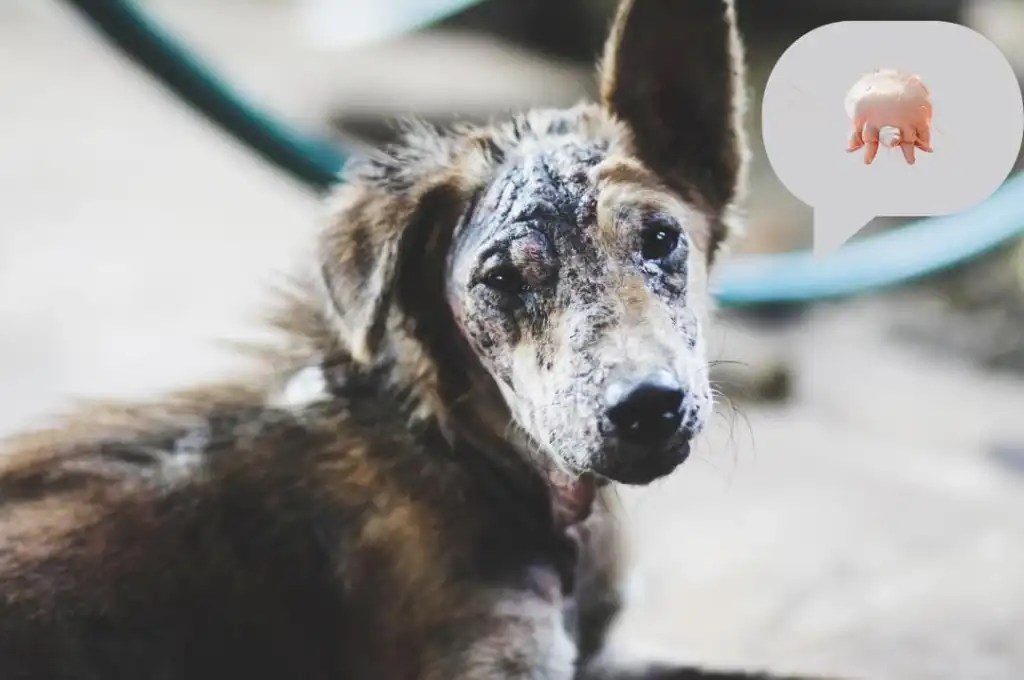
Scabies is a skin disease commonly known among the public for causing intense itching. It has also found its way into colloquial expressions such as “to be scabby” or “to make someone feel scabby.” It is even known that poets of the Divan literature era used this disease as a theme in their poetry.
The disease, medically known as scabies, holds a unique place in the history of medicine. In 1687, Italian physician Giovan Cosimo Bonomo and pharmacist Diacinto Cestoni were the first to identify a microorganism as the cause of a disease by establishing the connection between mite bites and skin lesions.
Causative Agents of Scabies
Scabies is a disease of significant importance for both human and animal health. In humans, the most commonly observed causative agent is Sarcoptes scabiei hominis, which leads to infestation. In veterinary medicine, various species-specific mites cause scabies: Sarcoptes scabiei equi in horses, Sarcoptes scabiei canis in dogs, and Notoedres cati in cats. Although these animal-specific mites may occasionally be transmitted to humans, they are unable to complete their biological cycle in the human body and therefore cannot reach maturity. As a result, they only cause temporary itching in humans.

Scabies in Humans
Scabies in humans is widespread across the world and can affect individuals of all ages, races, and social backgrounds, in any season. The prevalence of the disease tends to increase in communal living environments, particularly during autumn and winter, while it generally decreases in the summer months.
Families of Significant Scabies Agents in Veterinary Medicine
Species within the Sarcoptidae family are known as burrowing mites, as they penetrate and create tunnels within the host’s skin.
Species in the Knemidocoptidae family parasitize poultry, also exhibiting burrowing behavior.
Members of the Psoroptidae family live on the surface of the host’s skin and do not create tunnels.
Species from the family reside in hair follicles and sebaceous glands, and are therefore referred to as follicular mites.
Scabies in Cats and Dogs
Scabies is a commonly encountered parasitic disease in both cats and dogs. It can spread easily between animals. Infected pets may exhibit symptoms such as intense itching, fear, restlessness, aggression, growling, and loss of appetite. These behavioral issues can significantly impair both the health and well-being of your pet.

Sarcoptes scabiei canis
Sarcoptes scabiei canis is a mite that causes scabies in dogs. It resides and reproduces within the outer layers of the skin. These mites are highly contagious and can be transmitted through direct contact or indirectly via shared environments such as dog kennels, shelters, and parks.
Three to six weeks after infestation, dogs typically develop hypersensitivity to the mite antigens, leading to the onset of clinical symptoms. The condition usually begins around the head and gradually spreads to the rest of the body. Initially, redness and small bumps appear in affected areas. In advanced stages, scaling and crusting may occur, followed by hair loss and intense itching.
Demodex canis
Another agent of canine scabies is Demodex canis, a mite that exists in small numbers as part of the normal skin flora in most dogs without causing clinical symptoms. However, it is more commonly seen in young dogs. Several predisposing factors may trigger the disease, including youth, short hair, frequent washing, irritant substances, poor nutrition, poor physical condition, exhaustion, viral infections, rickets, and excessive use of alkaline soaps or shampoos. In animals with compromised immune systems, it can become a serious issue, typically causing localized hair loss.
Notoedres cati
Although commonly known as “feline scabies,” Notoedres cati can also affect dogs, particularly in environments where cats and dogs live together. In cats, the mite inhabits hair follicles and typically causes scaling and hair loss, especially around the eyelids, head, ear canals, and neck.
Otodectes cynotis
Otodectes cynotis, commonly referred to as the ear mite, is one of the most significant parasitic agents of otitis externa in companion animals. This mite, belonging to the Psoroptidae family, primarily inhabits the ear canal, though it can occasionally be found on other body parts such as the head, feet, and tail tip. It is a non-burrowing, obligate parasite, and its entire life cycle (egg, larva, nymph, adult) takes place within the ear, typically completing in about three weeks.
This mite is highly contagious and is found worldwide in both dogs and cats. It is often diagnosed during routine veterinary examinations. Transmission can occur through contaminated grooming tools such as brushes, combs, and other accessories. Clinical signs include pronounced itching, mild to severe dermatitis, frequent scratching of the ears, and head shaking. Severe itching may lead to self-trauma, bleeding, and aural hematoma. In some cases, intense infestations can result in significant irritation and secondary bacterial infections.
How is Scabies Transmitted to Dogs?
As a parasitic disease, scabies can spread rapidly among animals. The most common transmission route is direct contact between an infected and a healthy dog. Other transmission pathways include shared items and environmental exposure.
In direct transmission, scabies can be passed easily when an infected dog comes into close contact with another dog. Objects touched by infected dogs—such as collars, toys, blankets, sofas, and brushes—can also serve as sources of infection. Environmental exposure is another key factor, especially in dog parks, shelters, yards, and other open spaces. Additionally, lactating mothers can transmit mites to their puppies during nursing.

What Are the Symptoms of Scabies in Dogs?
The symptoms of scabies in dogs can vary depending on the type of mite, the strength of the dog’s immune system, the extent of mite exposure, the sensitivity of the skin, and the animal’s grooming and care routines.
Scabies typically begins with a sudden onset of intense itching. Since mites prefer hairless skin, the first noticeable signs are often found around the ears. However, ear scratching alone does not necessarily indicate scabies; it could also be caused by other parasitic conditions, such as leishmaniasis. Therefore, it’s important to examine not only the ears but also other hairless regions such as the abdomen and armpits, as well as the rest of the body.
The mites themselves are not visible to the naked eye. They are extremely small and burrow beneath the skin, detectable only under a microscope. Nonetheless, other clinical signs to look out for include:
- Redness and inflammation of the skin
- Hair loss, first observed on the legs and abdomen
- Self-inflicted wounds due to scratching
- Bleeding
- Small bumps that may develop into crusted sores
- Foul odor from infected wounds
Lesions are commonly found on the abdomen, legs, ears, chest, and elbows. If left untreated, scabies may spread across the entire body. In advanced stages, affected dogs may lose their appetite and begin to lose weight.
Scabies symptoms can differ significantly from one dog to another. Early detection of scabies can shorten the duration of treatment and improve the likelihood of a successful outcome. Delayed recognition, on the other hand, may lead to the development of secondary health problems and serious skin infections.
👉 A definitive diagnosis must be made by a licensed veterinarian through laboratory testing.
This blog post has been verified by Veterinarian Deniz ÇIRA
Resources:
Altı RH, Clemence RG, Thomas CA, Behan S, Boy MG, Watson P, ve diğerleri. Selamektinin köpeklerde Sarcoptes scabiei’ye ve veteriner hastaları olarak sunulan köpek ve kedilerde Otodectes cynotis’e karşı etkinliği ve güvenliği. Veteriner Parasitol. 2000;91:291–309.(2023)
Arlian LG, Morgan MS, Rapp CM, Vyszenski-Moher DL (1995) Some effects of sarcoptic mange in dogs. J Parasitol, 81: 698-702.(2023)
Arlian LG, Morgan MS, Rapp CM, Vyszenski-Moher DL (1996) The development of protective immunity in canine scabies. Vet Parasitol, 62: 133-142.(2023)
Bernal LJ, Parra MD (2004) Sarna sarcptica en el perro. Consulta Difus Vet, 110 : 51-56.(2023)
Beugnet F, Bourdeau P, Chalvet-Monfray K, Cozma V, Farkas R, Guillot J, ve diğerleri. Avrupa’da evcil kedilerin parazitleri: ortak istilalar ve risk faktörleri. Parazit Vektörleri. 2014;7:291.(2023)
Bornstein S (1996) Evaluation of an ELISA for the serological diagnosis of canine sarcoptic mange. Vet Dermatol, 7: 21-28.(2023)
Bourdoiseau G (2000) Parasitologie clinique du chien et du chat, NÈVA, Créteil.(2023)
Carlotti DN, Bensignor E (1997) La gale sarcoptique du chien : étude rétrospective de 38 cas. Prat Méd Chir Anim Comp, 32 : 117-127.(2023)
Curtis CF (2001) Evaluation of a commercially available enzyme-linked immunosorbent assay for the diagnosis of canine sarcoptic mange. Vet Rec, 148: 238-239.(2023)
Curtis CF (2004) Current trends in the treatment of Sarcoptes, Cheyletiella and Otodectes mite infestations in dogs and cats. Vet Dermatol, 15: 108-114.(2023)
Griffin CE (1993) Scabies, in Current Veterinary Dermatology (Griffin CE, Kwochka KW, Mac Donald JM Edrs), Mosby Year Book, St-Louis, 85-89.(2023)
Gross TL, Ihrke PJ, Walder E (1992) Veterinary Dermatopathology: a macroscopic and microscopic evaluation of canine and feline skin diseases. Mosby Year Book, Philadelphia.(2023)
Hopper K, Aldrich J, Haskins SC (2002) Ivermectin toxicity in 17 collies. J Vet Intern Med, 16: 89-94.(2023)
Kimberly S, Lower KS, Medleau LM, Hnilica K, Bigler B (2001) Evaluation of an enzyme-linked immunosorbent assay (ELISA) for the serological diagnosis of sarcoptic mange in dogs. Vet Dermatol, 12: 315-320.(2023)
Kraft W, Kraiss-Gothe A, Gothe R. Die Otodectes-cynotis-Infestation von Hund und Katze: Erregerbiologie, Epidemiologie, Pathogenese und Diagnose sowie Fallbeschreibungen generalisierter Räuden bei Hunden [Otodectes cynotis infestation of dogs and cats: biology of the agent, epidemiology, pathogenesis and diagnosis and case description of generalized mange in dogs]. Tierarztl Prax. 1988;16(4):409-15. German. PMID: 3065982.(2023)
Mealey KL, Bentjen SA, Gay JM, Cantor GH (2001) Ivermectin sensitivity in collies is associated with a deletion mutation of the mdr1 gene. Pharmacogenetics, 11: 727-733.(2023)
Morris DO, Dunstan RW (1996) A histomorphological study of sarcoptic acariasis in the dog: 19 cases. J Amer Anim Hosp Assn, 32: 119-124.(2023)
Mullen G, Oconner B. Mites (Acari). İçinde: Mullen G, Durden L, editörler. Tıbbi ve Veteriner Entomolojisi. Birleşik Krallık: Akademik; 2002. s. 449–516.(2023)
Order, D. (2022). Klasik Türk şiirinde Hastalık ve Hakaret ifadesi Olarak “Kudur” ve “Uyuz”. Divan Ede biyati Araştırmalan Dergisi,, 1070-1082. Retrieved from (2023)
https://dergipark.org.tr/en/pub/devdergis /issue/73930/1174972
Paksoy, Y., Gürle, E. Y. “Kedi ve Köpeklerde Uyuza Neden Olan Üç Farklı Etkenin Cinsiyet, Yaş vo Bazı Davranış Değişiklikleri ile ilişkisinin Araştırılması. Kocatepe Veterinary Journal (2023),365-374 <https://dergipark.org.tr/tr/pub/kvj/issue/79471/1294998>
Paterson S, Pike R, Boydell P (1995) Norvegian scabies in a dog. Vet Rec, 136: 393-394.(2023)
Prélaud P, Guaguère E (1995) Sensitization to the house dust mite Dermatophagoides farinae in dogs with sarcoptic mange. Vet Dermatol, 6:205-209.(2023)
Scott DW, Miller WH, Griffin CE (2001) Muller and Kirk’s Small Animal Dermatology, 6th edition, WB Saunders Company, Philadelphia.(2023)
Thoday Kl (1993) Serum immunoglobulin concentration in canine scabies, in Advances in Veterinary Dermatology vol 2 (Ihrke PJ, Mason IS, White SD Edrs), Pergamon Press, Oxford, 211-217.(2023)
Wilson N, Zarnke RL. Kulak pamukçuk akarı Otodectes cynotis’in (Hering), kurtçuk Gulo gulo (L.) üzerinde görülmesi. J Wildl Dis. 1985;21:180.(2023)




 VETEXPLAIN