

Ehrlichiosis is a rickettsial infection in dogs caused by Ehrlichia canis, E. chaffeensis, E. ewingii, and potentially E. ruminatum. These organisms are considered obligate intracellular bacteria, meaning they must live and reproduce within host cells. They proliferate specifically in the cytoplasmic vacuoles of circulating granulocytes, especially monocytes and tissue macrophages.
The disease has a worldwide distribution, but it is more common in tropical and subtropical climates.
Due to its connection with the life cycle of ticks, the incidence of the disease increases during spring and summer months.
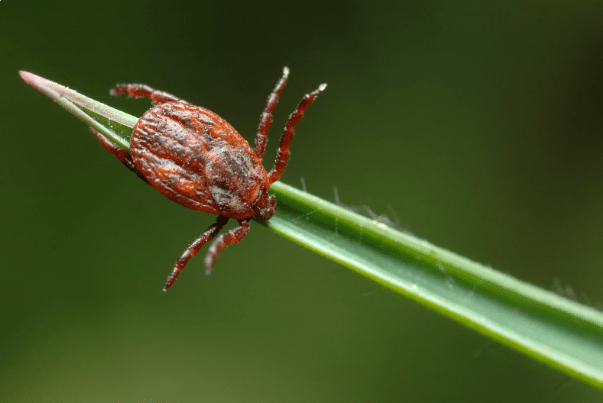
Ehrlichiosis in Animals and Humans
Depending on the species of Ehrlichia, the disease can occur in cats, dogs, goats, rodents, and even humans.
What is the Pathogenesis?
After entering the host, the pathogen invades monocytes, macrophages, and epithelial cells, and then spreads throughout the lymphatic system, including the liver and spleen. Abnormal cell proliferation causes organ enlargement, and triggers bacteremia and hemolysis.At this stage, severe clinical signs such as fever, anemia, and thrombocytopenia are typically observed. In chronic cases, the pathogen affects the bone marrow, suppressing the production of immune cells. As a result, opportunistic infections may worsen the condition, potentially leading to bleeding disorders and death.
How is it Transmitted?
Ehrlichia bacteria are primarily transmitted by various tick species:
- E. canis: Rhipicephalus sanguineus (brown dog tick)
- E. ewingii and E. chaffeensis: Amblyomma americanum (Lone Star tick)
- E. muris subsp. eauclairensis: Ixodes scapularis (black-legged tick)
- Panola Mountain Ehrlichia: Amblyomma americanum and Amblyomma maculatum
Infection occurs when an infected tick bites a human or animal.
Other Transmission Routes
In addition to tick bites, blood transfusion and organ transplantation can also transmit the disease.
What Are the Symptoms?
The clinical signs and prognosis of ehrlichiosis depend on the Ehrlichia species involved and the immune response of the dog. The disease progresses in three phases: acute, subclinical, and chronic—though distinguishing between these phases in practice can be difficult.
Acute Phase Symptoms:
- Fever
- Anorexia
- Depression
- Edema in limbs or scrotum
- Cough
- Difficulty walking
- Generalized lymphadenopathy
- Thrombocytopenia
Chronic Phase Symptoms:
- Weight loss
- Splenomegaly
- Glomerulonephritis
- Interstitial pneumonia
- Uveitis
- Meningitis
- Severe thrombocytopenia
- Epistaxis
- Hematuria
- Melena
- Petechiae
Typical Clinical Signs of E. canis Infection in Dogs:
- Fever
- Lethargy
- Anorexia
- Weight loss
- Petechial and/or ecchymotic hemorrhages on the skin and mucous membranes
- Lymphadenopathy
- Splenomegaly
- Uveitis

Typical Clinical Signs of E. canis Infection in Cats
In cats, the typical clinical signs of E. canis infection include:
- Fever
- Lethargy
- Anorexia
- Weight loss
- Hyperesthesia
- Joint pain
The most commonly observed hematological abnormalities are:
- Thrombocytopenia
- Leukopenia
- Anemia
Ehrlichiosis in Humans
The most pathogenic species for humans is Ehrlichia chaffeensis.
Although the disease is rare, the most commonly reported symptoms are:
- Fever
- Chills
- Headache
- Muscle aches
- Occasionally, gastrointestinal discomfort
How is the Disease Diagnosed?
After clinical signs raise suspicion, cytological examination of the blood can reveal clusters or colonies of organisms in the cytoplasm of mononuclear cells, supporting a diagnosis.
In addition, serological tests such as:
- ELISA
- PCR
- Indirect Immunofluorescence Assay (IFA)
can be used to confirm the diagnosis.
How Can We Protect Against Ehrlichiosis?
Currently, no vaccine exists to protect dogs from Ehrlichia species.
The most effective method of prevention is to avoid exposure to tick vectors.This includes the use of ectoparasiticides that repel or kill ticks, which significantly reduces the risk of disease transmission.
This blog post has been verified by Res. Asst. Deniz Zeynep TELCİ.
Sources:
Aziz, MU, Hussain, S., Song, B., Ghauri, HN, Zeb, J. ve Sparagano, OA (2022). Köpeklerde ehrlichiosis: Güney ve doğu Asya ülkelerine vurgu yapılarak patojen ve vektörleri hakkında kapsamlı bir inceleme. Veterinerlik bilimleri , 10 (1), 21.
Chakrabarti A, Rickettsial Hastalıkları. Önleyici Veteriner Hekimliği Ders Kitabı (5. baskı). Kalyani Yayınları tarafından 2012, 715-734’te yayımlanmıştır.
Ettinger Stephen J, Feldman Edward C. Zorunlu Hücre İçi Bakteriyel Patojenler. Veteriner İç Hastalıkları Ders Kitabı (6. baskı). Elsevier Saunders, 2005, 631-636. 5.
Harrus S, Waner T, Bark H. Köpek monositik ehrlichiosis güncellemesi. Özet. Devam. Eğitim. Uygulama. Veteriner. 1997; 19:431-444.
Shimon Harrus, Trevor Waner, Mathios E. Mylonakis, Jane E. Sykes, Barbara Kurollo,
44 – Ehrlichiosis, Editör(ler): Jane E. Sykes, Greene’in Köpek ve Kedi Bulaşıcı Hastalıkları (Beşinci Baskı), WB Saunders, 2021, Sayfalar 522-541.




 VETEXPLAIN