
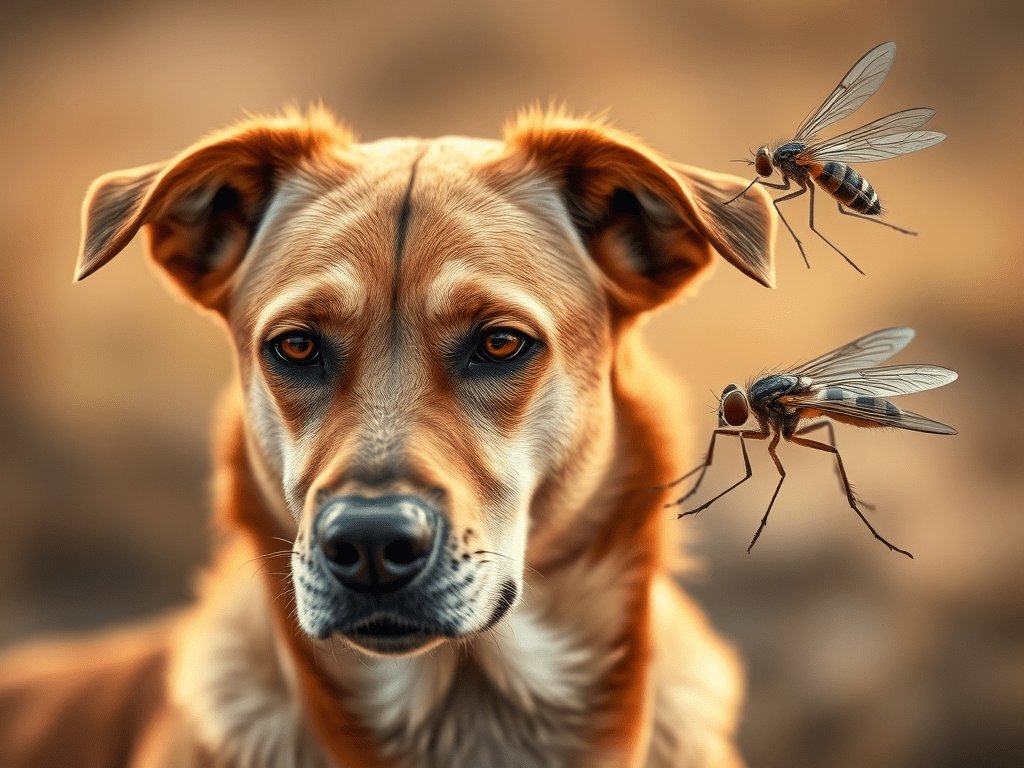
Leishmaniasis is a zoonotic disease transmitted by sand flies, commonly observed in dogs and humans in the Mediterranean region, the Middle East, and South America, and it can lead to fatal outcomes. In nature, it occurs in mammals and lizards, but outside of humans, it is most frequently seen in dogs. In addition to causing severe clinical manifestations in dogs, their role as reservoirs of the disease is also of significant importance.
Leishmania spp.
Morphology
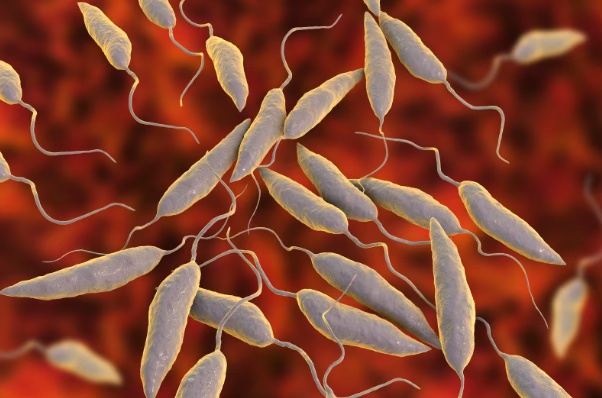
Leishmania species are protozoa belonging to the family Trypanosomatidae, characterized by having a single flagellum. During their development, they exhibit two distinct morphological forms: promastigote and amastigote. In addition, a transitional form, known as the paramastigote form, has also been described between these two stages. The amastigote form is found within the macrophage cells of vertebrate hosts, appearing as a non-motile, oval structure measuring 2 × 5 μm. In Giemsa-stained preparations, a dark purple-stained nucleus can be observed centrally, along with a rod-shaped kinetoplast stained purple with azure. The promastigote form, present in the digestive tract of sand fly vectors, represents the flagellated stage of the parasite. In this form, the body may reach up to 20 μm in length. Its staining properties are identical to those of the amastigote form.
Life Cycle
The life cycle of Leishmania species occurs in a cycle between Phlebotominae vectors and vertebrate hosts. Parasites are transmitted to the host during the blood meal of infected sand fly vectors. They enter the host’s macrophages and macrophage-like cells through invagination and subsequently begin to develop within parasitophorous vacuoles.
During a blood meal, the parasites are ingested along with macrophages and transferred into the digestive tract of the sand fly. Within the sand fly’s digestive system, the parasite exhibits different morphological forms.
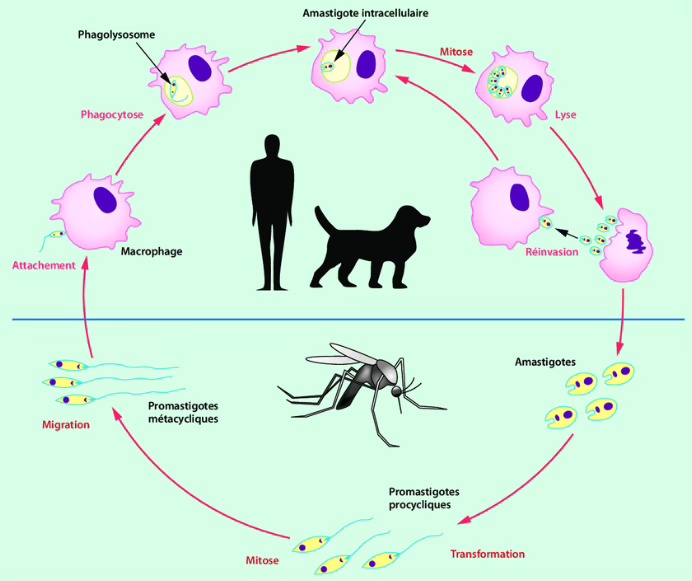
Evolutionary cycle of Leishmania infantum. Source: ResearchGate
Etiology
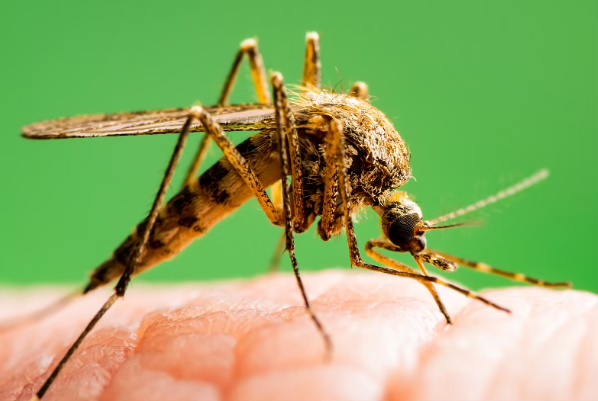
Sand flies are the vectors of Leishmania species. Dogs and rodents serve as the primary reservoirs for human infection. The genus Leishmania comprises numerous species, among which the ones for which dogs act as natural hosts and that cause clinical manifestations include L. infantum, L. tropica, L. chagasi, and L. peruviana. The most prevalent species is L. infantum, which has been identified in the majority of clinical cases and is distributed throughout the Mediterranean coastal regions, including Turkey.
Pathophysiology
The most likely route of systemic dissemination of promastigotes is within macrophages. Amastigotes (the aflagellated forms) develop and multiply inside macrophages, subsequently spreading to new cells. Clinical symptoms typically develop between 3 months and 7 years after infection.
Clinical Presentation
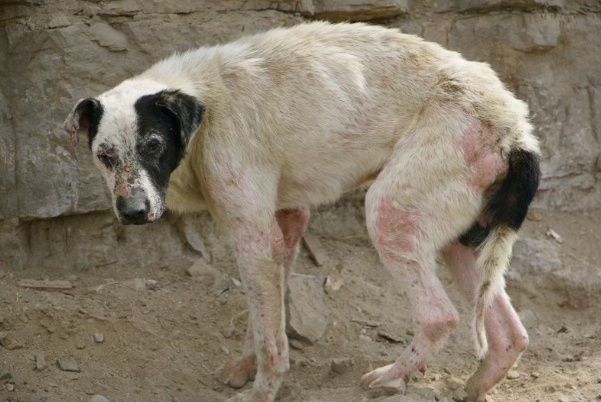
In dogs, clinical signs usually appear months after infection and may include weight loss, anorexia, exercise intolerance, lethargy, polydipsia, vomiting, diarrhea, polyphagia, melena, epistaxis, coughing, sneezing, and syncope. On physical examination, findings may include lymphadenopathy, alopecia, fever, cachexia, conjunctivitis, ulcerative dermatitis, and lameness.
Diagnosis
In the diagnosis of canine leishmaniasis, culture and microscopic examination, delayed hypersensitivity tests, serological methods, and molecular biological techniques are employed.
The most consistent findings in leishmaniasis cases include mild to moderate non-regenerative anemia, hypoalbuminemia associated with polyclonal gammopathy, hyperglobulinemia, a decreased albumin/globulin ratio, and proteinuria. In some cases, azotemia, thrombocytopenia, increased ALT and ALP activities, along with leukocytosis or leukopenia, may also occur.
Amastigotes can be identified by the presence of a purple-stained nucleus and a distinct, rod-shaped kinetoplast visible in Romanowsky-stained smears.
This blog has been verified by veterinarian Elif KENAR.
Resources
SCHAER, M. GASCHEN, F. (2019) Köpek ve Kedilerin Klinik Hekimliği. Konya, Türkiye: Nuri ALTUĞ, Date of Usage: 22.03.2024



 VETEXPLAIN
Yorum bırakın