
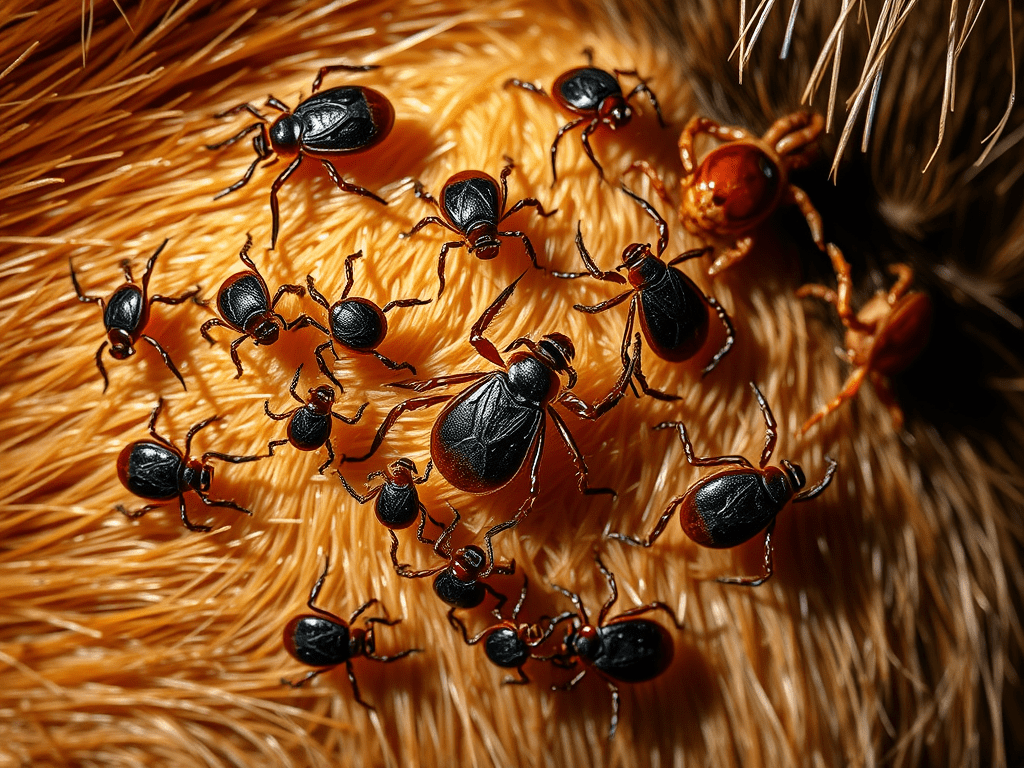
What is a tick?
Ticks are ectoparasites that suck blood of mammals classified as arthropods. Ticks have morphological stages as larvae, nymphs and adults and they have to suck blood from all of their developmental periods.
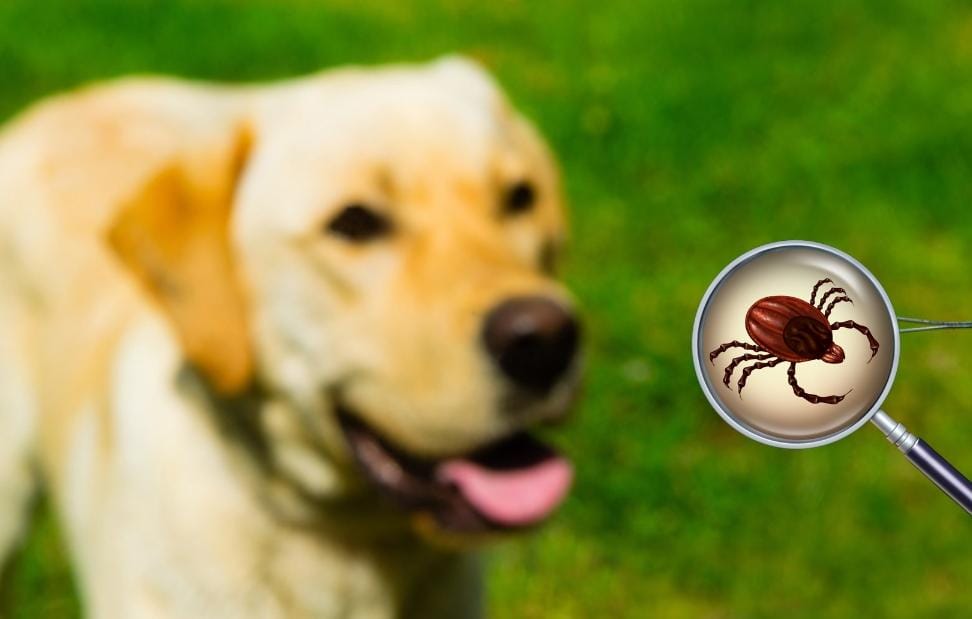
Why should we check for ticks?
Ticks, which are parasites, are also vectors for various parasites, viruses, and bacteria. The saliva they secrete during blood sucking causes various allergies and toxications. The longer the tick stays in the body, the higher the risk of disease transmission to the host. Some diseases transmitted by ticks:
- Crimean Congo Hemorrhagic Fever (H.marginatum)
- Lyme Disease (Ixodes scapularis)
- Babesiosis (Ixodidae)
- Theileriosis (Ixodidae)

How often should tick checks be made?
Ticks are closely related to climatic factors such as heat and humidity. They show seasonal activity. They are activated when the land temperature is 10 ℃. The longer the blood-sucking period of the tick, the higher the risk of disease transmission. For this reason, tick control should be performed after contact of pets with the outdoor environment as the weather warms up. It is also recommended to carry out a second check one or two hours after the first check, if possible.
Which areas of pets should be checked?
The whole body should be checked for ticks, but since ticks prefer areas with thin and sensitive skin;
- Behind the ears
- Neck
- Between the legs Between the legs
- Under the tail becomes the target.
Tick removal methods
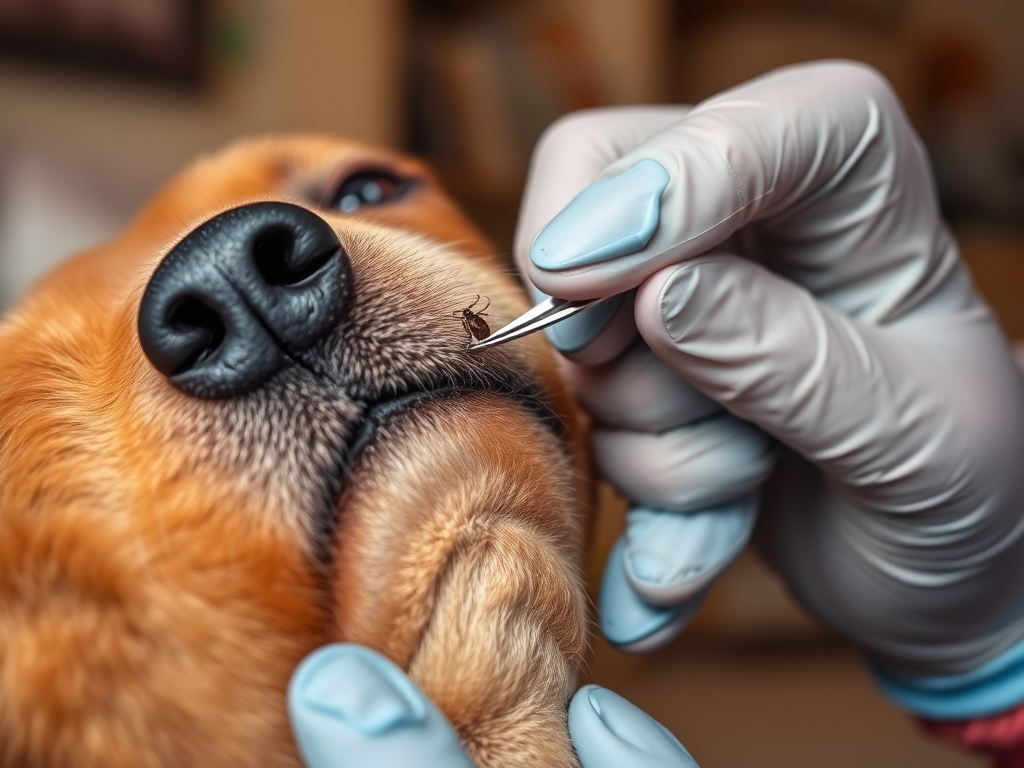
After the tick is seen on the body, it should be removed as soon as possible. If the mouth organelles remain in the body during extraction, it usually does not present a serious threat. The tick should be carefully pulled out with the help of a pair of pliers or tweezers by grasping the part of the tick closest to the point where it attaches to the skin of the host. Methods such as burning with matches or lighters, pouring alcohol, diesel, or similar substances on the tick should never be applied during tick removal. After the removal process, the health status of the pet should be followed and in case of symptoms such as high fever, vomiting and weakness after the tick is removed, the nearest veterinary clinic should be visited.
This blog post has been verified by Prof. Dr. Ahmet DENİZ.
Sources
Karaoğlan, İ., Karaoğlan, F., & Karaoğlan, E. (2021). Kene ısırması nedeniyle başvuran olguların epidemiyolojik, klinik ve laboratuvar bulgularının irdelenmesi. Klimik Dergisi. 07.07.2025 https://www.klimikdergisi.org/wp-content/uploads/2021/01/kene-isirmasi-nedeniyle-basvuran-olgularin-epidemiyolojik-klinik-ve-laboratuvar-bulgularinin-irdelenmesi.pdf
Özçelik, S., Sezgin, F. H., & Tıraşoğlu, M. (2020). Türkiye’deki kenelerin tıbbi-veteriner önemi ve kontrolü. Cumhuriyet Üniversitesi Veteriner Fakültesi Dergisi, 2(1), 1-11. 07.07.2025 https://tvj.cumhuriyet.edu.tr/tr/download/article-file/1199738
Tüfekçi, S., Yılmaz, S., & Çelikel, F. C. (2019). Kırım Kongo Kanamalı Ateşi (KKKA) ve korunma yolları. Çocuk Sağlığı ve Hastalıkları Dergisi, 62(3), 226-233. 07.07.2025




 VETEXPLAIN
Yorum bırakın