
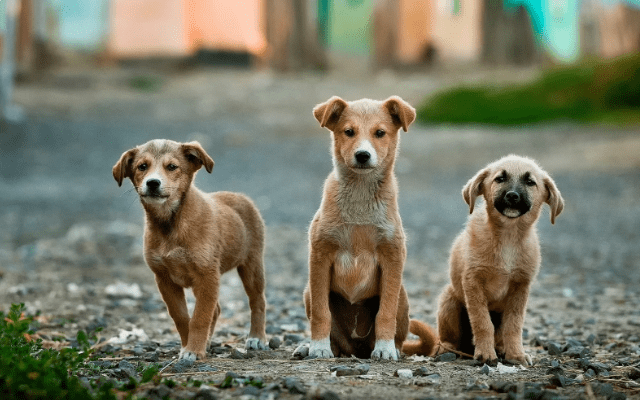
Canine Parvoviral Enteritis (CPV) is a highly contagious and potentially fatal viral disease affecting dogs. The disease predominantly affects unvaccinated puppies between the ages of 6 weeks and 6 months, who are particularly susceptible. It is characterized by severe hemorrhagic diarrhea, which is why it is commonly referred to as “bloody diarrhea” among the public.
Etiological Agent
The causative agent of the disease is the canine parvovirus. Parvoviruses are small, non-enveloped, single-stranded DNA viruses. There are two types: CPV-1 and CPV-2, with CPV-2 being significantly more pathogenic in dogs. CPV-2 primarily affects the intestinal and cardiac tissues, leading to severe clinical manifestations. CPV-2 has three known variants: CPV-2a, CPV-2b, and CPV-2c. The virus is highly resistant to environmental conditions and can remain viable for up to one year or longer under harsh circumstances.

Pathogenesis After Viral Entry
Following entry into the host, the virus initially replicates in regional lymphoid tissues. It then disseminates via the bloodstream to target the intestinal mucosa. After maturing in the crypts of the intestinal epithelium, the virus migrates to the intestinal villi—finger-like projections that line the intestinal surface and are critical for nutrient absorption, enzymatic secretion, nutrient transport, mucus production, and local immune defense.
The virus induces destruction of these villi, severely impairing their functional integrity. As a result, the intestinal epithelial barrier is compromised, leading to loss of absorptive capacity, impaired enzymatic activity, and mucosal dysfunction. This disruption also causes hemorrhaging within the intestinal wall due to cellular destruction. Consequently, the clinical presentation includes hemorrhagic diarrhea, vomiting, and severe dehydration.
The primary cause of mortality in CPV-infected dogs is not only the direct intestinal damage but also the immunosuppressive effects of the virus. The compromised immune system allows intestinal bacteria to translocate into the bloodstream, resulting in sepsis, which may progress to multiple organ failure and death if left untreated.

Clinical Signs of the Disease
The incubation period of canine parvoviral enteritis typically ranges from 4 to 7 days following viral exposure. Infections caused by CPV-1 are generally asymptomatic but may lead to neonatal mortality. In contrast, CPV-2 manifests in two primary clinical forms: myocarditis and acute hemorrhagic enteritis, with the latter being significantly more common.
Early clinical signs of acute hemorrhagic enteritis are nonspecific and include general symptoms such as fever, lethargy, anorexia, and depression. The most specific and pathognomonic sign of CPV infection is bloody diarrhea, often accompanied by vomiting. The feces may vary in color from yellow to brown and is typically associated with a distinct metallic or iron-like odor. Acute vomiting, gastritis, and enteritis result in severe dehydration and abdominal pain.
Course of the Disease and Treatment
The prognosis for unvaccinated puppies is generally poor, while adult and vaccinated dogs tend to experience a milder disease course. Even after clinical recovery and hospital discharge, infected dogs may continue shedding the virus in their feces for an additional 2 to 3 weeks, posing a risk of environmental contamination.
Fluid therapy is critical for maintaining circulatory volume, correcting dehydration, and ensuring proper oxygen and energy delivery to tissues. Intravenous antibiotics are administered to prevent sepsis, which can result from the translocation of intestinal bacteria into the bloodstream due to the loss of mucosal integrity. Additionally, antibiotics help protect immunocompromised animals from secondary infections.
Probiotics are employed to restore the balance of intestinal flora by promoting beneficial bacterial populations over pathogenic ones. Antiviral therapies, particularly interferons, are used to inhibit viral replication and modulate immune responses. In recent years, hyperimmune serum derived from recovered animals has also been used to provide passive immunity.
Although enteral feeding was once discouraged, recent studies support its implementation to maintain intestinal functionality during illness. Nutritional management involves the administration of high-protein, high-fat, and low-carbohydrate diets using easily digestible foods. In cases of anorexia, nasogastric tube feeding may be necessary.
Early diagnosis and intervention are key determinants of successful treatment outcomes. Therefore, immediate veterinary consultation is strongly recommended upon the observation of any clinical signs associated with the disease.

Prevention of the Disease
Due to its rapid evolution and the continuous emergence of new variants, CPV-2 can cause infection even in vaccinated dogs. Therefore, effective prevention of canine parvoviral enteritis relies on a multifaceted approach, including:
- Adequate colostrum intake during the neonatal period to ensure passive immunity,
- Implementation of a proper vaccination protocol, and
- Minimization of stress factors, which can predispose animals to infection or worsen disease outcomes.
Another critical aspect of disease prevention is reducing the risk of environmental contamination. Dogs should not be allowed outside or exposed to unknown environments before the vaccination schedule is fully completed. Premature exposure may lead to infection via contact with contaminated surfaces or infected animals.
Additionally, to manage the window of susceptibility—the period between the waning of maternal antibodies and the initiation of effective vaccine-induced immunity—CPV-specific vaccines administered at 4 weeks of age have been recommended in certain high-risk scenarios. This early intervention aims to provide protection during this vulnerable phase, especially in settings with known exposure risks or high population density.
This blog post has been verified by Veterinarian Esin HASTÜRK
Sources
AVCİ, Ç. (2024). Canine Parvovirus ve Canine Coronavirus Etkenlerinin Eş Zamanlı Teşhisine Yönelik Kit Geliştirilmesi. Doktora Tezi. Konya: Selçuk Üniversitesi, Veteriner Fakültesi.
AYTUĞ, N. (2022). Köpek ve Kedilerin İç Hastalıkları Klinik El Kitabı. Ankara, Türkiye: Medipres
BEKARER, K. (2024). Köpeklerde Parvoviral Enteritis Hastalığının Mineral Homeostazisi Üzerine Etkisinin Araştırılması. Yüksek Lisans Tezi. Kayseri: Erciyes Üniversitesi, Veteriner Fakültesi.
KIRBAŞ, A., AYDIN, Ö. (2021) Köpeklerin Parvovirüs Enfeksiyonunda Tedavi Uygulamalarına Güncel Yaklaşım. Yozgat, Türkiye: Bozok Veterinary Sciences, 2(2), 62-72.
KORKMAZ, S. (2023). Parvoviral Enteritisli Köpeklerde Bazı Akut Faz Proteinlerinin Değerlendirilmesi. Yüksek Lisans Tezi. Afyonkarahisar: Afyon Kocatepe Üniversitesi, Veteriner Fakültesi.
Polat, E. K. (2023) Canine Parvoviral Enteritisli Köpeklerde Plazma Fibroblast Büyüme Faktörü-23 ve Enteritisli Köpeklerde Plazma α-Klotho Düzeylerinin Araştırılması. Kars: Kafkas Üniversitesi, Veteriner Fakültesi.
SCHAER, M. GASCHEN, F. (2019) Köpek ve Kedilerin Klinik Hekimliği. Konya, Türkiye: Nuri ALTUĞ

 VETEXPLAIN