
- MORPHOLOGY (Structure)
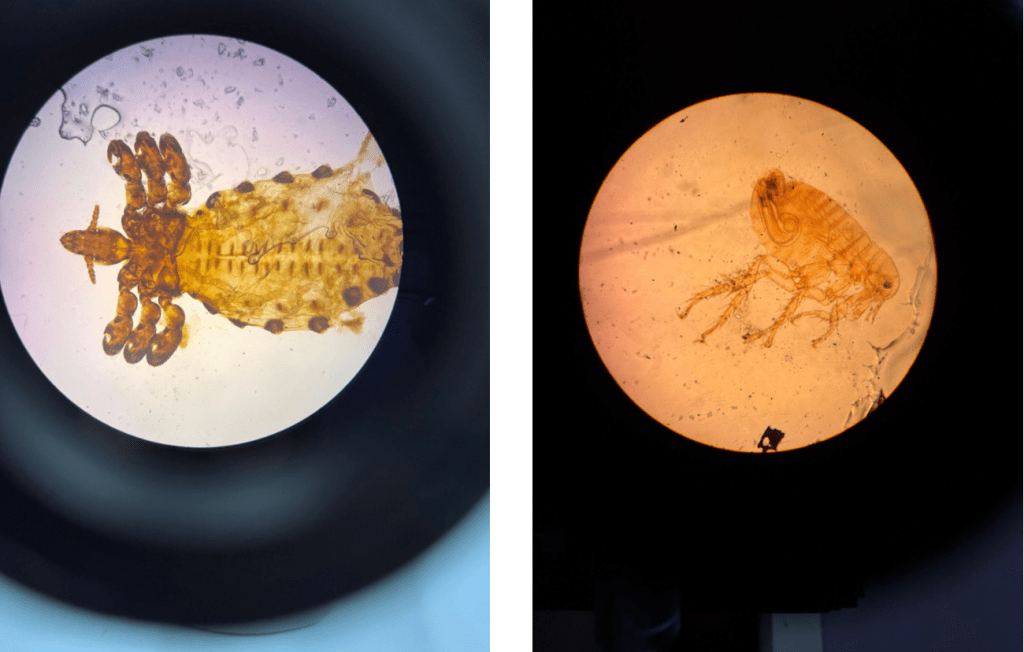
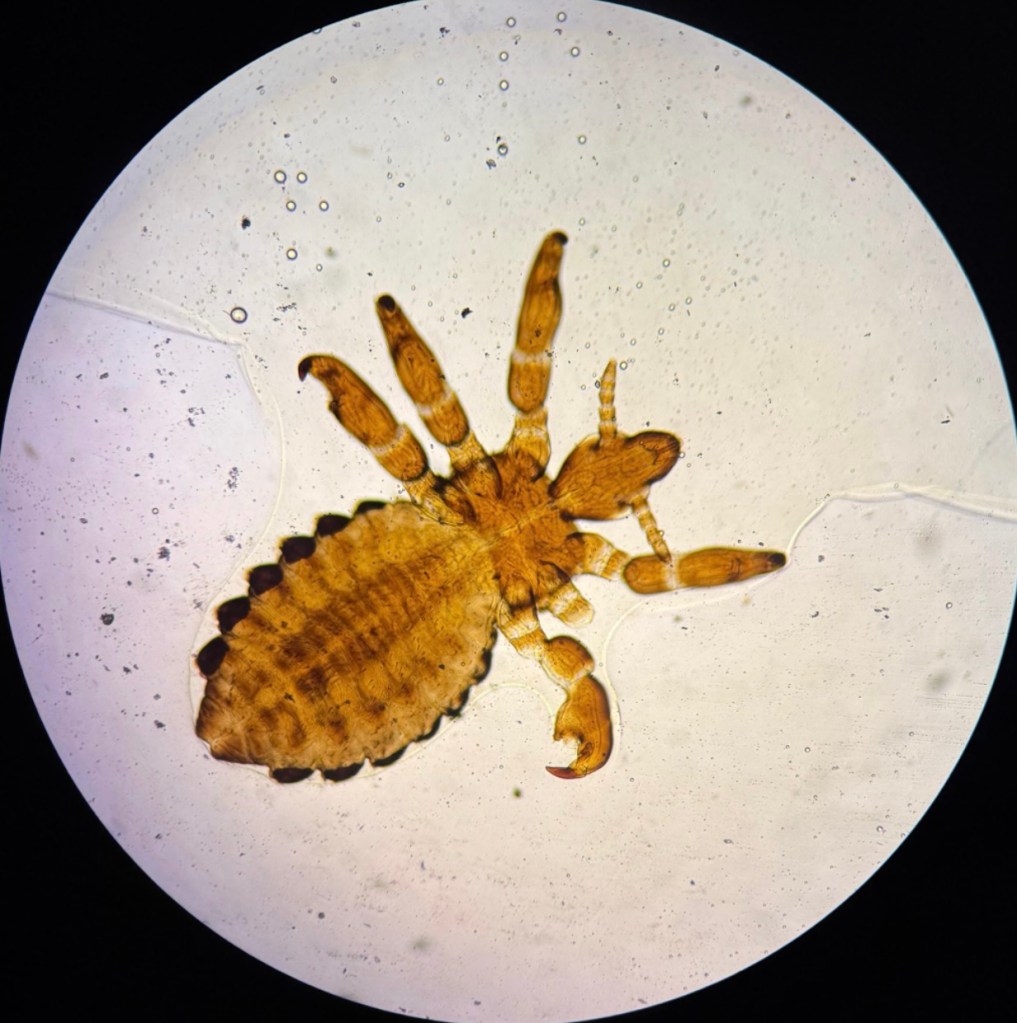
- Lice have a dorsoventral (flattened from top to bottom) body. They have 6 legs. Thanks to the claws at the ends of their legs, they can cling tightly between the host’s hairs.
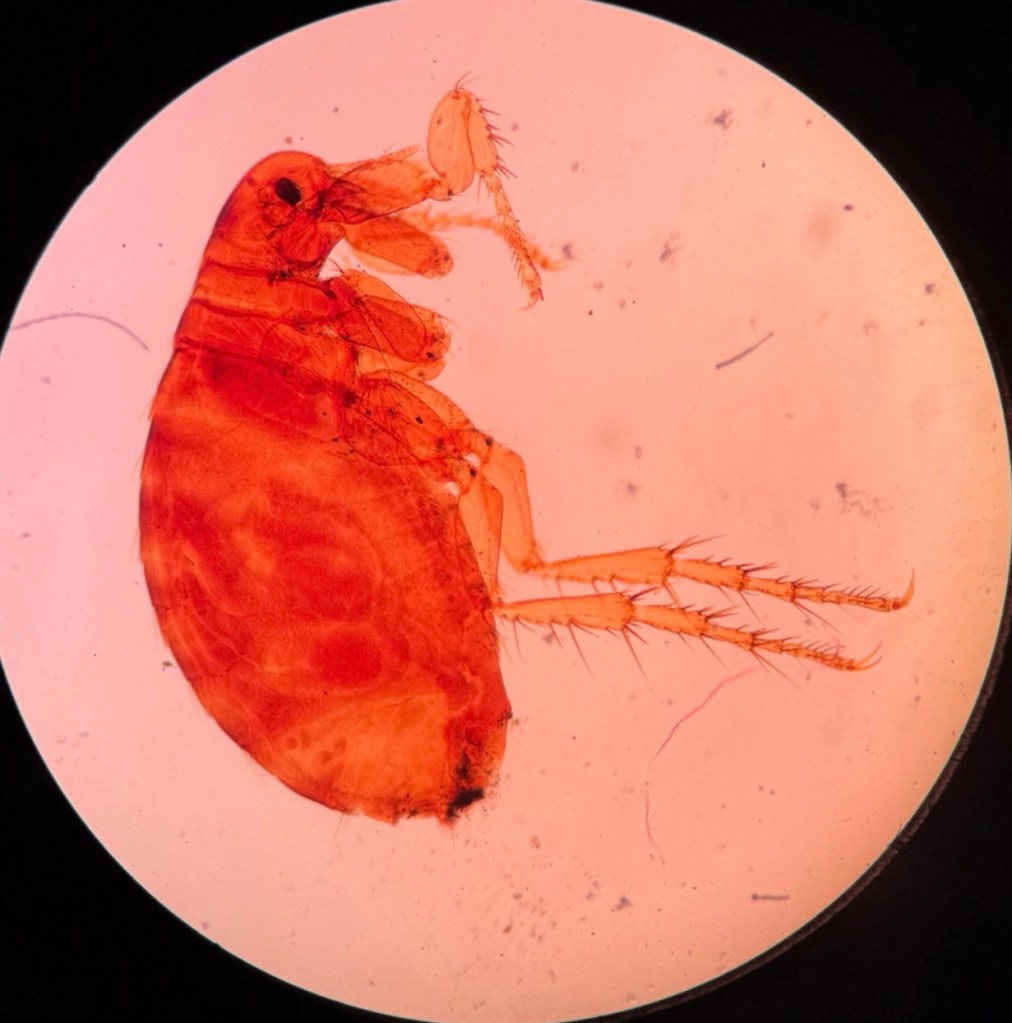
(Şahin, K. (2025). Lice. Personal archive) - Fleas have laterally compressed bodies, allowing them to move quickly on the animal’s skin. Fleas also have 6 legs. They are not permanent on the host; after feeding on blood, they leave the host.
(Şahin, K. (2025). Flea. Personal archive)
2. MOVEMENT TYPE
- Lice cannot jump; they crawl slowly among the hairs.
- Fleas can jump up to 150 times their body length with their strong hind legs.
3. HABITAT
- Lice spend their entire life cycle on the host. If separated from the host, they die within a few days. They are permanent ectoparasites.
- Fleas lay their eggs in animal shelters, household dust, and soil. Their larvae and pupae can hide in carpets, beds, or furniture.
4. LIFE CYCLE
- Lice life cycle: Egg → Nymph → Adult (all stages occur on the host).
- Flea life cycle: Egg → Larva → Pupa → Adult (most stages develop in the environment).
5. ITCHING AND SKIN EFFECTS
- Lice bites usually cause intense itching and hair loss.
- Flea bites can cause allergic reactions (Flea Allergy Dermatitis – FAD) and anemia in young animals.
6. DISEASE TRANSMISSION
- Lice transmit a limited number of diseases (e.g., Bartonella).
- Fleas are carriers of more zoonotic diseases (e.g., Rickettsia felis, Dipylidium caninum).
7. TREATMENT AND PREVENTION METHODS
- For lice treatment, direct contact is usually prevented and medications recommended by the veterinarian are used.
- For flea control, both the animal and its environment must be thoroughly cleaned.
This blog post has been verified by Prof. Dr. Ahmet DENİZ
SOURCES
Durden, L. A., & Musser, G. G. (2014). Taxonomy of lice and their endosymbiotic bacteria in the post-genomic era. Clinical Microbiology and Infection, 20(4), 309–314. 15.07.2025(Şahin, K. (2025). Personal archive)
Iannino, F., Sulli, N., Maitino, A., Pascucci, I., Pampiglione, G., & Salucci, S. (2017). Fleas of dog and cat: Species, biology and flea-borne diseases. Veterinaria Italiana, 53(4), 277–288. 15.07.2025
Özcel, M. A., & Daldal, N. (Ed.). (1997). Parazitolojide artropod hastalıkları vektörler. Türkiye Parazitoloji Derneği Yayınları. 15.077.2025


Yorum bırakın